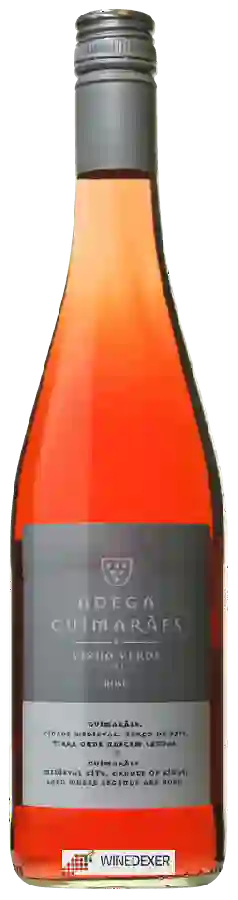
Winery GuimarãesRosé
 Pink wine


This wine generally goes well with

Details and technical informations about Winery Guimarães's Rosé.
Discover the grape variety: Frankenthal
A table grape with long bunches and spherical blue-black berries with thick skin and juicy flesh, delivering a pleasant sweet flavour. Late-ripening. Very rarely vinified. Cultivated for fresh consumption in Germany, Austria and Switzerland, prized for its sweetness, attractive table appearance and good keeping. A witness to Germanic ampelographic heritage, grown since the Middle Ages in Central Europe.
Last vintages of this wine
The best vintages of Rosé from Winery Guimarães are 0
Informations about the Winery Guimarães
The Winery Guimarães is one of of the world's greatest estates. It offers 9 wines for sale in the of Vinho Verde to come and discover on site or to buy online.

The wine region of Vinho Verde
Portuguese star of fresh, slightly sparkling white. High-end Alvarinho in Monção and Melgaço: mineral, precise whites with signature notes of lemon, white peach, flowers and a tense saline finish. Aromatic Loureiro (orange blossom, bay leaf), round Trajadura, full Avesso, lively Arinto. Light natural effervescence, low alcohol (9-11°), sharp vivacity: ideal aperitif and seafood.
The wine region of Minho
Portugal's northernmost region, heart of Atlantic Vinho Verde. Signature lively, lightly sparkling whites with signature notes of citrus, green apple, white flowers, fresh herbs and a saline touch, thirst-quenching, low-alcohol palate — the sunshine wine par excellence. High-end star Alvarinho (peach, exotic fruits, minerality), floral Loureiro (laurel), ample Trajadura, taut Arinto, structured Avesso. Vinhão as lively red.
The word of the wine: Solera
A method of maturing practiced in Andalusia for certain sherries, which aims to continuously blend older and younger wines. It consists of stacking several layers of barrels; those located at ground level (solera) contain the oldest wines, the youngest being stored in the barrels on the upper level. The wine to be bottled is taken from the barrels on the lower level, which is replaced by younger wine from the upper level, and so on.




