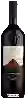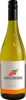
Winery Giovanni BelliaTai
 White wine


In the mouth this white wine is a powerful.
This wine generally goes well with lean fish, shellfish or mature and hard cheese.
Taste structure of the Tai from the Winery Giovanni Bellia
Light | Bold | |
Dry | Sweet | |
Soft | Acidic |
In the mouth the Tai of Winery Giovanni Bellia in the region of Veneto is a powerful.
Food and wine pairings with Tai
Pairings that work perfectly with Tai



Original food and wine pairings with Tai


The Tai of Winery Giovanni Bellia matches generally quite well with dishes of pasta, shellfish or mature and hard cheese such as recipes of pasta gratin milanese style, calamari with chorizo or magic wrap with steak and cheese.
Details and technical informations about Winery Giovanni Bellia's Tai.
Discover the grape variety: Saint Pierre doré
Belonging to the Estaing wines, the Saint Pierre doré is also called Roussellou. With an average budding, this variety is presented in the form of full, winged, elongated and very large bunches, with pulpy, spherical and medium-sized berries. When ripe, the fruit is golden-white in colour, with bronze leaves, which may be three-lobed or whole. The red colour is also found on the internodes of its herbaceous branch. For best results, a fairly long pruning will suit the Saint Pierre Doré, which is not overly afraid of oidium or mildew, but more afraid of grey rot. The characteristics of the roussellou mean that it could play a major role in the production of sparkling wines. The vine does indeed give a very acidic taste, not very sweet and with low degree aromas. It has been noted that the extent of the vineyard recorded in 1958 is 123 Ha, to be reduced to 1 Ha in 1994 on the French territory.
Last vintages of this wine
The best vintages of Tai from Winery Giovanni Bellia are 0
Informations about the Winery Giovanni Bellia
The Winery Giovanni Bellia is one of of the world's great estates. It offers 18 wines for sale in the of Veneto to come and discover on site or to buy online.

The wine region of Veneto
Veneto is an important and growing wine region in northeastern Italy. Veneto is administratively Part of the Triveneto area, aLong with its smaller neighbors, Trentino-Alto Adige and Friuli-Venezia Giulia. In terms of geography, culture and wine styles, it represents a transition from the Alpine and Germanic-Slavic end of Italy to the warmer, drier, more Roman lands to the South. Veneto is slightly smaller than the other major Italian wine regions - Piedmont, Tuscany, Lombardy, Puglia and Sicily - but it produces more wine than any of them.
The word of the wine: Phenolic ripeness
A distinction is made between the ripeness of sugars and acids and the ripeness of tannins and other compounds such as anthocyanins and tannins, which will bring structure and colour. Grapes can be measured at 13° potential without having reached this phenolic maturity. Vinified at this stage, they will give hard, astringent wines, without charm.