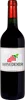
Winery Georges ClavienDôle
 Red wine


This wine generally goes well with

Details and technical informations about Winery Georges Clavien's Dôle.
Discover the grape variety: Tinto Fino
Structured, elegant reds with a deep, dark ruby color, firm, fine tannins and a dense palate, offering intense aromas of black fruits (blackberry, blackcurrant, plum), black cherry, tobacco, leather, spices and balsamic notes. Fine cellaring potential, excelling in American and French oak ageing. Star of Ribera del Duero DO (Vega Sicilia, Pingus, Pesquera) on the Castilian high plateaux. Synonym for tempranillo in Ribera del Duero.
Last vintages of this wine
The best vintages of Dôle from Winery Georges Clavien are 0
Informations about the Winery Georges Clavien
The Winery Georges Clavien is one of of the world's great estates. It offers 14 wines for sale in the of Sierre to come and discover on site or to buy online.

The wine region of Sierre
Largest wine-growing commune of Swiss Valais at the heart of the Alpine arc, steep south-east slopes on schist and glacial moraines. Signature Pinot Noir as red king (~40%): fine and silky with notes of red cherry, raspberry, undergrowth, dried flowers and an alpine mineral touch, fine tannins and elegant palate. Fendant (Chasselas) as white king (~40%): taut and mineral (green apple, citrus, almond). Vibrant Petite Arvine, ample Johannisberg, supple Gamay.
The wine region of Valais
Switzerland's largest vineyard, capital of native grapes. Straight, precise alpine whites: light, floral Chasselas (Fendant), signature Petite Arvine with saline, grapefruit and rhubarb notes, rich, apricoty Amigne, mineral Humagne Blanche. Altitude reds: fine Pinot Noir, crisp Gamay, native Cornalin and Humagne Rouge, spicy and deep. Highly precise alpine age-worthy wines.
The word of the wine: Performance
Quantity of grapes harvested per hectare. In AOC, the average yield is limited on the proposal of the appellation syndicate, validated by the Inao. The use of high-performance plant material (especially clones) and better control of vine diseases have increased yields. This is not without consequences on the quality of the wines (dilution) and on the state of the market (too much wine). We must not over-simplify: low yields are not synonymous with quality, and it is often in years with generous harvests that we find the greatest vintages (1982 and 1986 in Bordeaux, 1996 in Champagne, 1990 and 2005 in Burgundy...).