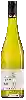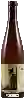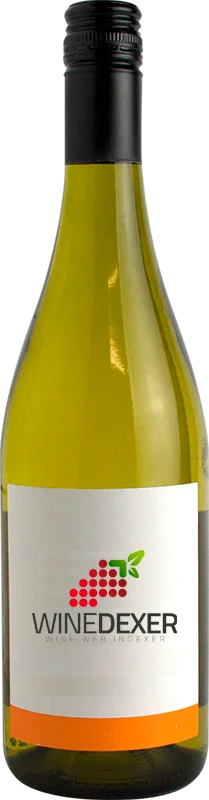
Weingut Geiger & SöhneTreibstoff
 White wine



This wine is a blend of 3 varietals which are the Müller-Thurgau, the Riesling and the Sylvaner.
This wine generally goes well with pork, vegetarian or poultry.

Wine flavors and olphactive analysis

On the nose the Treibstoff of Weingut Geiger & Söhne in the region of Franken often reveals types of flavors of tree fruit.
Food and wine pairings with Treibstoff
Pairings that work perfectly with Treibstoff



Original food and wine pairings with Treibstoff



The Treibstoff of Weingut Geiger & Söhne matches generally quite well with dishes of pork, rich fish (salmon, tuna etc) or spicy food such as recipes of north welsch, light salmon steaks and or lamb kebab.
Details and technical informations about Weingut Geiger & Söhne's Treibstoff.
Discover the grape variety: Müller-Thurgau
Light, aromatic whites with a tender palate and moderate acidity, with muscat-like aromas of white flowers, apple, citrus, peach and honeyed notes. Made as easy dry whites, popular semi-dry wines and some sparkling cuvées. Widely planted in Germany (Rheinhessen, Baden), northern Italy (Alto Adige, Trentino), Austria, Switzerland, Hungary and Japan. Cross of riesling × madeleine royale created in 1882 by Hermann Müller in Geisenheim.
Last vintages of this wine
The best vintages of Treibstoff from Weingut Geiger & Söhne are 2018, 0, 2017, 2019
Informations about the Weingut Geiger & Söhne
The Weingut Geiger & Söhne is one of of the world's greatest estates. It offers 74 wines for sale in the of Franken to come and discover on site or to buy online.

The wine region of Franken
Homeland of German Silvaner: dry, straight, mineral and lively whites with notes of green apple, citrus, fresh herbs and a saline touch, planted here for over 350 years (1,500 ha, a quarter of the vineyard). Also supple, floral Müller-Thurgau, taut Riesling, aromatic Bacchus. Some discreet reds (Spätburgunder). 6,040 ha in Bavaria along the Main around Würzburg, red sandstone and shell-limestone soils.
The word of the wine: Local wine
Table wine, but with the origin indicated. It corresponds to a particular legislation: the freedom to use grape varieties is greater than for the AOC, but the quality criteria such as the approval tastings can sometimes be more demanding. The legislation is still evolving, but for the moment there are three levels: regional (e.g. Vin de Pays d'Oc), departmental and local (e.g. Côtes de Thongue).