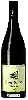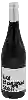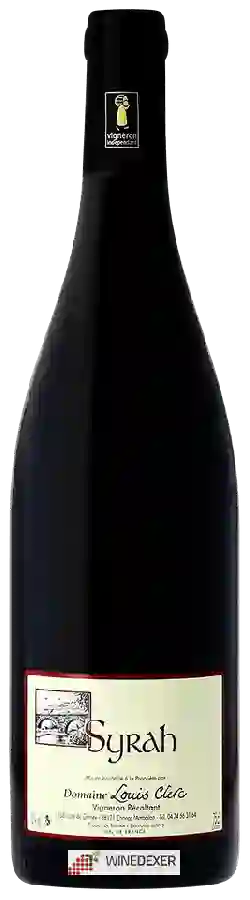
Domaine Louis ClercSyrah
 Red wine



This wine generally goes well with beef, lamb or mature and hard cheese.

Wine flavors and olphactive analysis


On the nose the Syrah of Domaine Louis Clerc in the region of Vin de France often reveals types of flavors of spices.
Food and wine pairings with Syrah
Pairings that work perfectly with Syrah



Original food and wine pairings with Syrah

The Syrah of Domaine Louis Clerc matches generally quite well with dishes of beef, lamb or spicy food such as recipes of marinated shrimp skewers with garlic, mathieu's lamb tagine or mussels with curry.
Details and technical informations about Domaine Louis Clerc's Syrah.
Discover the grape variety: Abondance
Simple, fresh dry whites with a pale golden robe, a supple palate and moderate acidity. Understated aromas of citrus and alpine white flowers. Rustic, productive profile. Preserved for its heritage value in varietal conservatories, it no longer contributes to commercial production. Not to be confused with the Abondant. An ancient native white grape from Savoy, once grown in Savoy and the Isère valley, now nearly extinct.
Last vintages of this wine
The best vintages of Syrah from Domaine Louis Clerc are 2015, 2016, 2014
Informations about the Domaine Louis Clerc
The Domaine Louis Clerc is one of of the world's greatest estates. It offers 6 wines for sale in the of Vin de France to come and discover on site or to buy online.

The wine region of Vin de France
The freest category of French wine, the playground of winemakers working outside the AOC. All styles combined: fruity reds, lively or ambitious whites, everyday rosés, unusual blends, natural wines, atypical grapes (Petit Manseng in Languedoc, Riesling in Provence), experimental winemaking (skin-contact whites, no sulphur). Grape and vintage labelling allowed, no geographic constraint. From the pop, convivial cuvée to the artisan gem: freedom in a bottle.
The word of the wine: Vinification of sweet wines
Moelleux and liquoreux wines are characterized by the presence of residual sugars (natural sugar of the grape), not transformed into alcohol under the effect of yeasts. The fermentation is stopped by cold and by the addition of sulphur dioxide (sulphur).