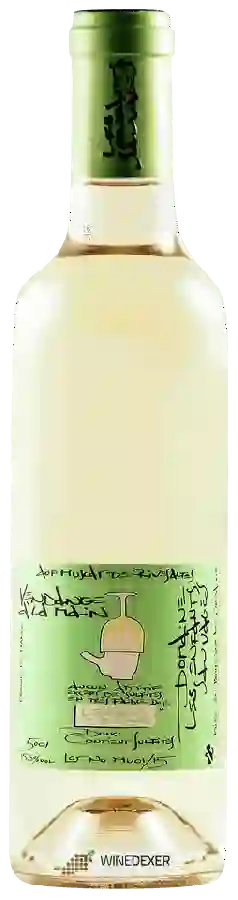
Domaine Les Enfants SauvagesMuscat de Rivesaltes
 Natural sweet wine


This wine generally goes well with spicy food and sweet desserts.

Food and wine pairings with Muscat de Rivesaltes
Pairings that work perfectly with Muscat de Rivesaltes


Original food and wine pairings with Muscat de Rivesaltes
The Muscat de Rivesaltes of Domaine Les Enfants Sauvages matches generally quite well with dishes of spicy food or sweet desserts such as recipes of korma chicken (india) or king's cake with frangipane.
Details and technical informations about Domaine Les Enfants Sauvages's Muscat de Rivesaltes.
Discover the grape variety: Tinto cão
Structured, elegant reds with a deep ruby robe, fine tannins and fresh acidity, featuring aromas of red fruits, black cherry, spices, dried flowers and balsamic notes. Very good ageing and oxidative maturation capacity. An essential component of great vintage Porto (one of the five classic recommended grapes) and dry reds of Douro DOC. Very late-ripening, low-yield native Portuguese grape, saved from near-disappearance.
Last vintages of this wine
The best vintages of Muscat de Rivesaltes from Domaine Les Enfants Sauvages are 2015, 2014
Informations about the Domaine Les Enfants Sauvages
The Domaine Les Enfants Sauvages is one of of the world's greatest estates. It offers 11 wines for sale in the of Muscat de Rivesaltes to come and discover on site or to buy online.

The wine region of Muscat de Rivesaltes
Star AOC of Roussillon's Vins Doux Naturels: Muscat a Petits Grains and Muscat of Alexandria as signatures in equal parts in sweet whites — pale gold robe with green or pinkish glints, dazzling signature aromas of peach, lemon, mango, fresh grape, rose and mint, unctuous palate preserved by mutage with alcohol. Amber evolution with age toward honey, candied apricot and spices. AOC, ~4,400 ha across 99 communes, varied soils (granite, schist, limestone), Mediterranean and Muscat de Noel.
The wine region of Languedoc-Roussillon
Largest single French vineyard, dominated by sunny, generous reds. Spicy Syrah, candied Grenache (ripe fruit, garrigue), structured Carignan, deep Mourvèdre, supple Cinsault. Stars: structured Corbières, Minervois, Faugères, Saint-Chinian; round Côtes-du-Roussillon. Legendary vins doux naturels: Banyuls and Maury (fortified Grenache) with notes of cocoa, fig, prune.
The word of the wine: Venaison
Applied to the bouquet of a wine reminiscent of the smell of big game.