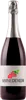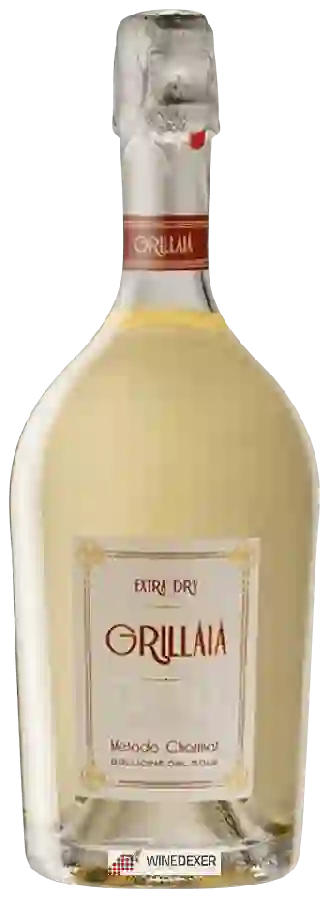
Winery Foss MaraiGrillaia Metodo Charmat Extra-Dry
 Sparkling wine



This wine generally goes well with

Wine flavors and olphactive analysis

Details and technical informations about Winery Foss Marai's Grillaia Metodo Charmat Extra-Dry.
Discover the grape variety: Rabo de Ovelha
Lively and fresh dry whites with a pale golden robe, a supple palate and preserved acidity, with signature aromas of citrus (lemon), green apple, white flowers and Mediterranean herbal notes. A thirst-quenching Iberian profile to drink young. A traditional component of Portuguese white blends from the Tejo, Alentejo and Douro, expressing the identity of central Portugal. Native Portuguese white grape, whose name means "sheep's tail".
Last vintages of this wine
The best vintages of Grillaia Metodo Charmat Extra-Dry from Winery Foss Marai are 0
Informations about the Winery Foss Marai
The Winery Foss Marai is one of of the world's great estates. It offers 27 wines for sale in the of Puglia to come and discover on site or to buy online.

The wine region of Puglia
Heel of the boot, 80% red vineyard, sunny and generous. Fleshy, jammy Primitivo (= Zinfandel) with notes of black cherry, plum, chocolate and spices, powerful alcohol and melted tannins, a star in Primitivo di Manduria. Deep, structured Negroamaro (black-bitter) with a bitter finish in Salice Salentino. Structured Nero di Troia, spicy Susumaniello.
The word of the wine: Oenographer
Wine label collector. It is becoming increasingly difficult to obtain the labels of famous vintages, which thus seek to avoid forgeries.