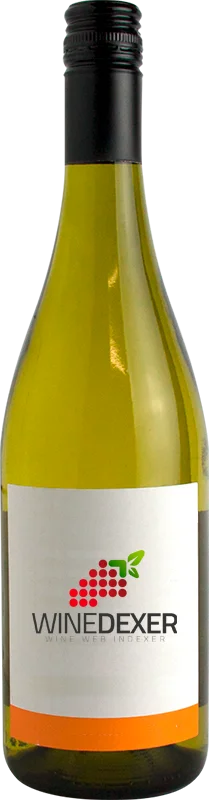
Winery Fleur des TempliersBordeaux Blanc
 White wine
This wine generally goes well with pork, vegetarian or poultry.
Food and wine pairings with Bordeaux Blanc
Pairings that work perfectly with Bordeaux Blanc



Original food and wine pairings with Bordeaux Blanc


The Bordeaux Blanc of Winery Fleur des Templiers matches generally quite well with dishes of pork, vegetarian or poultry such as recipes of ollada (catalonia), quiche lorraine or stuffed peppers.
Details and technical informations about Winery Fleur des Templiers's Bordeaux Blanc.
Discover the grape variety: Bianca
Complex interspecific crossing between 12375 Seyve-Villard (2 Eger) and Bouvier - a variety of Austrian origin - obtained in 1963 and in Hungary by Csizmazia Jozsef and Bereznai Laszlo. It should be noted that Bianca, a monogenic variety, which is nevertheless resistant to certain cryptogamic diseases, was "bypassed" in 2010 by a less resistant strain of mildew, which was also the case for Regent. It can be found in the United States, Serbia, Hungary, Austria, Italy, Switzerland, ... almost unknown in France. In these countries, it is certainly the most cultivated as a wine grape but it can also be found on the markets.
Informations about the Winery Fleur des Templiers
The Winery Fleur des Templiers is one of wineries to follow in Bordeaux.. It offers 5 wines for sale in the of Bordeaux to come and discover on site or to buy online.

The wine region of Bordeaux
Bordeaux, in southwestern France, is one of the most famous, prestigious and prolific wine regions in the world. The majority of Bordeaux wines (nearly 90% of the production Volume) are the Dry, medium and Full-bodied red Bordeaux blends for which it is famous. The finest (and most expensive) are the wines of the great châteaux of Haut-Médoc and the right bank appellations of Saint-Émilion and Pomerol. The former focuses (at the highest level) on Cabernet Sauvignon, the latter on Merlot.
The word of the wine: Aroma
A pleasant smell that can be primary (or varietal, i.e. characteristic of the grape), secondary (resulting from fermentation) or tertiary (resulting from the aging of the wine in the bottle).