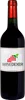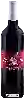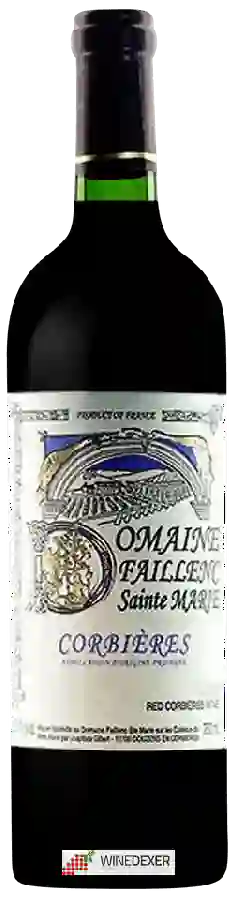
Domaine Faillenc Sainte-MarieCorbières
 Red wine



In the mouth this red wine is a powerful with a nice balance between acidity and tannins.
This wine generally goes well with beef, veal or pasta.

Taste structure of the Corbières from the Domaine Faillenc Sainte-Marie
Light | Bold | |
Smooth | Tannic | |
Dry | Sweet | |
Soft | Acidic |
In the mouth the Corbières of Domaine Faillenc Sainte-Marie in the region of Languedoc-Roussillon is a powerful with a nice balance between acidity and tannins.
Wine flavors and olphactive analysis






On the nose the Corbières of Domaine Faillenc Sainte-Marie in the region of Languedoc-Roussillon often reveals types of flavors of cherry, smoke or earthy and sometimes also flavors of blackberry, red fruit or tobacco.
Food and wine pairings with Corbières
Pairings that work perfectly with Corbières



Original food and wine pairings with Corbières
The Corbières of Domaine Faillenc Sainte-Marie matches generally quite well with dishes of beef, pasta or veal such as recipes of improved horse steak, salmon and spinach lasagna or tournedos rossini with port sauce.
Details and technical informations about Domaine Faillenc Sainte-Marie's Corbières.
Discover the grape variety: Muscat de Frontignan
Aromatic fortified sweet natural wines with a golden to amber robe and an ample, perfumed palate. Powerful muscat signature aromas (rose, fresh grape), orange blossom, exotic fruits (lychee), candied fruits (apricot), honey and Mediterranean notes. Star of the Muscat de Frontignan AOC, one of the great iconic vins doux naturels of the Languedoc. Languedocian synonym for Muscat Blanc à Petits Grains grown at Frontignan.
Last vintages of this wine
The best vintages of Corbières from Domaine Faillenc Sainte-Marie are 2015, 2017, 2016, 2014 and 2013.
Informations about the Domaine Faillenc Sainte-Marie
The Domaine Faillenc Sainte-Marie is one of of the world's greatest estates. It offers 7 wines for sale in the of Corbières to come and discover on site or to buy online.

The wine region of Corbières
Largest AOC in Languedoc, 95% Mediterranean reds. Signature old-vine Carignan (up to 60%): fleshy reds with black fruit, garrigue, black olive, spice and tight tannins. Blended with round, sunny Grenache, peppery Syrah, dense Mourvèdre and supple Cinsault. A few fresh rosés and whites (Grenache Blanc, Roussanne).
The wine region of Languedoc-Roussillon
Largest single French vineyard, dominated by sunny, generous reds. Spicy Syrah, candied Grenache (ripe fruit, garrigue), structured Carignan, deep Mourvèdre, supple Cinsault. Stars: structured Corbières, Minervois, Faugères, Saint-Chinian; round Côtes-du-Roussillon. Legendary vins doux naturels: Banyuls and Maury (fortified Grenache) with notes of cocoa, fig, prune.
The word of the wine: Female
Characterizes wines whose pleasantness results from elegance and finesse rather than power.