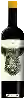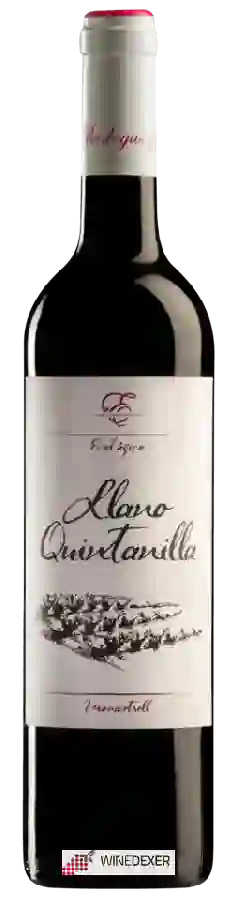
Winery EvineLlano Quintanilla Monastrell
 Red wine
In the mouth this red wine is a powerful with a nice balance between acidity and tannins.
This wine generally goes well with beef, game (deer, venison) or lamb.
Taste structure of the Llano Quintanilla Monastrell from the Winery Evine
Light | Bold | |
Smooth | Tannic | |
Dry | Sweet | |
Soft | Acidic |
In the mouth the Llano Quintanilla Monastrell of Winery Evine in the region of Murcie is a powerful with a nice balance between acidity and tannins.


Food and wine pairings with Llano Quintanilla Monastrell
Pairings that work perfectly with Llano Quintanilla Monastrell



Original food and wine pairings with Llano Quintanilla Monastrell

The Llano Quintanilla Monastrell of Winery Evine matches generally quite well with dishes of beef, pasta or lamb such as recipes of pot-au-feu, spaghetti with garlic or shoulder of lamb on a bed of potatoes.
Details and technical informations about Winery Evine's Llano Quintanilla Monastrell.
Discover the grape variety: Saint-Côme
Saint-Côme blanc is a grape variety that originated in France (Aveyron). It produces a variety of grape specially used for wine making. It is rare to find this grape to eat on our tables. The white Saint-Côme can be found in several vineyards: South-West, Cognac, Bordeaux, Provence & Corsica, Rhone valley, Loire valley, Savoie & Bugey, Beaujolais.
Informations about the Winery Evine
The Winery Evine is one of of the world's greatest estates. It offers 5 wines for sale in the of Murcie to come and discover on site or to buy online.

The wine region of Murcie
Murcia is one of the smallest and least known regions in Spain. Nestled in the extreme Southeast of the country, it is bordered by Andalusia to the west, Castilla-La Mancha to the North, Valencia to the east and the Mediterranean Sea to the south. This small administrative region consists of a single province and an administrative centre that share the same name. As far as wine is concerned, Murcia has three designations of origin.
The word of the wine: Reassembly
During the vinification process, a "cap" is formed at the top of the vats with the solid parts (skin, pulp, pips, etc.), which contain tannins and colouring elements. Pumping over consists of emptying the vat from the bottom and pouring the juice back to the top, in order to mix the cap and the juice and to favour the exchange and the extraction. This old technique allows a better exchange between the solid parts and the liquid.