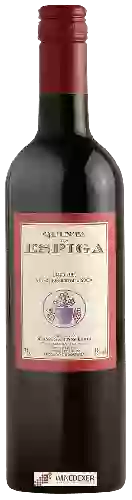
The Winery Quinta da Espiga of Lisboa

The Winery Quinta da Espiga is one of the best wineries to follow in Lisboa.. It offers 4 wines for sale in of Lisboa to come and discover on site or to buy online.
Looking for the best Winery Quinta da Espiga wines in Lisboa among all the wines in the region? Check out our tops of the best red, white or effervescent Winery Quinta da Espiga wines. Also find some food and wine pairings that may be suitable with the wines from this area. Learn more about the region and the Winery Quinta da Espiga wines with technical and enological descriptions.
How Winery Quinta da Espiga wines pair with each other generally quite well with dishes of beef, pasta or veal such as recipes of braised beef with carrots, macaroni and cheese gratin or sauté of pork with carrots and potatoes.
On the nose the red wine of Winery Quinta da Espiga. often reveals types of flavors of cherry, oaky or smoke and sometimes also flavors of blackberry, vanilla or licorice. In the mouth the red wine of Winery Quinta da Espiga. is a powerful.
Lisboa (formerly Estremadura) is a prolific wine region located at the Center of Portugal's Atlantic coast. Despite being one of the country's most productive winemaking areas, its name remains relatively obscure in wine terms, as its wines have traditionally been labeled with the names of the local sub-regions, which include Alenquer, Bucelas and Colares. The region is also home to Portugal's capital, Lisbon.
The region fell under the VR (Vinho Regional) classification until 2008, when the category was renamed IGP (Indicaciones Geográficas Protegidas) to bring it into line with the rest of Europe.
When the switchover happened, the Portuguese wine authorities took the opportunity to rename the Estremadura appellation as "Lisboa", after Lisbon, which marks the region's southern boundary.
There are nine DOCs in Lisboa, but many are more famous for their history than their modern wine industry. The most prestigious wines from the region fall under the Alenquer and Bucelas DOCs.
The region's position on the coast gives rise to the broad Terroir that shapes the local wine industry.
The Serra de Montejunto hills run North from Lisbon, and effectively divide Lisboa in half.
Along the coast, the Atlantic batters the vineyards with high winds and autumn rains, making viticulture a challenge. The most notable DOC on this side of the hills is Colares, which is more famous for its phylloxera-resistant soils than its robust red wines made from Ramisco.
The cool, wet conditions also shape the Lourinhã and Óbidos DOCs, famous for brandy and Sparkling wine, respectively.
How Winery Quinta da Espiga wines pair with each other generally quite well with dishes of pasta, pork or shellfish such as recipes of maultaschen ( swabian ravioli ), steamed pork chops or hake with small shrimps for cookeo.
On the nose the white wine of Winery Quinta da Espiga. often reveals types of flavors of earth, microbio or tree fruit and sometimes also flavors of citrus fruit, tropical fruit. In the mouth the white wine of Winery Quinta da Espiga. is a .
In Portugal, it is one of the most planted white grape varieties, and we have found it to be very similar to the torrontés grown in Spain (Galicia). It can be found in Australia and South Africa, but is almost unknown in France.
How Winery Quinta da Espiga wines pair with each other generally quite well with dishes of beef, lamb or spicy food such as recipes of monkfish (anglerfish) à la sétoise, chiche kebab in armenian or lamb shoulder confit.
On the nose the pink wine of Winery Quinta da Espiga. often reveals types of flavors of citrus fruit, red fruit.
In red winemaking, wine made from the marcs by pressing after devatting. See goutte (wine of).
Planning a wine route in the of Lisboa? Here are the wineries to visit and the winemakers to meet during your trip in search of wines similar to Winery Quinta da Espiga.
Most certainly Portuguese. Loureiro is part of the grape varieties of many Spanish and Portuguese appellations, including the famous Vinho Verde. It would be a close relative of the albarino and the sousão.