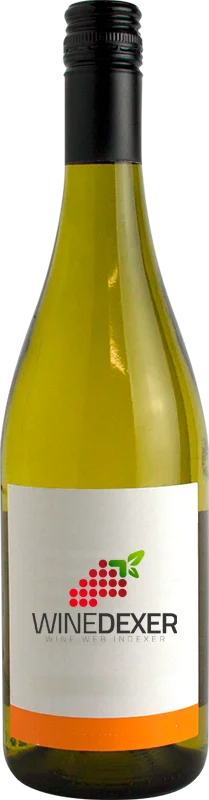
Winery Pazo CasanovaCasanova Blanco
 White wine



This wine generally goes well with
Details and technical informations about Winery Pazo Casanova's Casanova Blanco.
Discover the grape variety: Marsanne
Marsanne is a white grape variety that originated in Montélimar in the Drôme, several centuries ago. Marsanne is also found in Cassis, Savoie, Languedoc-Roussillon and Saint-Péray in the Ardèche, where it produces remarkable sparkling wines. The warm, sunny climate of the Rhone Valley, Languedoc-Roussillon and Provence, as well as the dry, stony soil, are ideal conditions for its development. Its bunches are quite large and provide small, juicy berries that are sensitive to grey rot and strong winds. These two grape varieties complement each other perfectly: together they give light wines with little acidity, aromas of yellow fruit, white fruit and flowers with notes of honey and liquorice. This is for example what the appellations Saint-Péray, Hermitage, Crozes-Hermitage, Saint-Joseph, Côtes-du-Vallée du Rhône, Corbières, or Cassis express... which represent about 700 hectares.
Last vintages of this wine
The best vintages of Casanova Blanco from Winery Pazo Casanova are 2013, 0
Informations about the Winery Pazo Casanova
The Winery Pazo Casanova is one of of the world's greatest estates. It offers 8 wines for sale in the of Galice to come and discover on site or to buy online.

The wine region of Galice
Galicia is one of the 17 first-level administrative regions (called comunidades autónomas) of Spain. It occupies the northwestern corner of the Iberian Peninsula, and is exposed on two sides to the Atlantic Ocean. To the South is Portugal, to the east Castilla y Leon. Viticulture has a Long tradition in Galicia, introduced to the region by the ancient Romans and continued by monks throughout the Middle Ages.
The word of the wine: Presses
The juice that results from pressing the grapes after fermentation. At the end of the maceration, the vats are emptied, the first juice obtained is called the free-run wine and the marc remaining at the bottom of the vat is then pressed to give the press wine. We say more quickly "the presses". Their quality varies according to the vintage and the maceration. A too vigorous extraction releases the tannins of pips and the wine of press can then prove to be very astringent. Often the winemaker raises it separately, deciding later whether or not to incorporate it totally or partially into the grand vin.