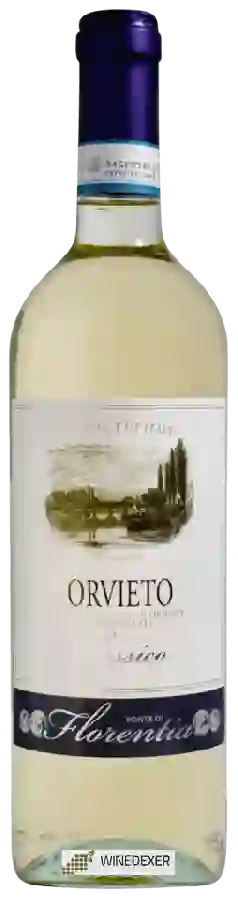
Winery Ponte di FlorentiaOrvieto Classico
 White wine



In the mouth this white wine is a with a nice freshness.
This wine generally goes well with vegetarian, appetizers and snacks or lean fish.

Taste structure of the Orvieto Classico from the Winery Ponte di Florentia
Light | Bold | |
Dry | Sweet | |
Soft | Acidic |
In the mouth the Orvieto Classico of Winery Ponte di Florentia in the region of Umbria is a with a nice freshness.
Food and wine pairings with Orvieto Classico
Pairings that work perfectly with Orvieto Classico



Original food and wine pairings with Orvieto Classico


The Orvieto Classico of Winery Ponte di Florentia matches generally quite well with dishes of pasta, vegetarian or appetizers and snacks such as recipes of italian pasta, summer tuna quiche or lili's gressins.
Details and technical informations about Winery Ponte di Florentia's Orvieto Classico.
Discover the grape variety: Vernaccia
Structured, mineral whites with a pale golden robe, a taut palate with preserved acidity, and signature aromas of almond, white flowers, citrus (lemon), and saline notes. Distinctive Tuscan identity (San Gimignano). The star of Italy's first DOC (1966), promoted to DOCG in 1993. An Italian white variety whose name is shared by several distinct varieties (San Gimignano, Oristano, Serrapetrona).
Last vintages of this wine
The best vintages of Orvieto Classico from Winery Ponte di Florentia are 2013, 0
Informations about the Winery Ponte di Florentia
The Winery Ponte di Florentia is one of of the world's greatest estates. It offers 6 wines for sale in the of Orvieto Classico to come and discover on site or to buy online.

The wine region of Orvieto Classico
Historic heart of Orvieto DOC in Umbria (volcanic tuff-limestone soil): Grechetto and Procanico (Trebbiano Toscano) (>=60%) with Verdello, Canaiolo Bianco (Drupeggio) and Malvasia — fruity and floral profile with green apple, meadow flowers, citrus, yellow berries and spice hint, pale straw colour, fresh vivacity, good acidity, long perfumed finish with almond notes. Distinctive tuff minerality.
The wine region of Umbria
"Green heart" of Italy, cradle of Sagrantino: exceptional tannic red in Sagrantino di Montefalco DOCG, dense and concentrated with notes of blackberry, candied plum, liquorice, spice and leather, powerful tannins and long ageing. Suppler Sangiovese in blends, Cabernet and Merlot in Torgiano DOCG. Orvieto whites based on Grechetto and Trebbiano, full and almondy, from dry to sweet Muffato. ~13,000 ha between Tuscany and Lazio.
The word of the wine: Grand Cru
In Burgundy, the fourth and final level of classification (above the regional, communal and premier cru appellations), designating the wines produced on delimited plots of land (the climats) whose name alone constitutes the appellation. The climats classified as Grand Cru are 32 in the Côte d'Or plus one in Chablis which is divided into 7 distinct climats. Representing barely 1.5% of the production, the Grand Crus are the aristocracy of Burgundy wines.