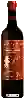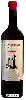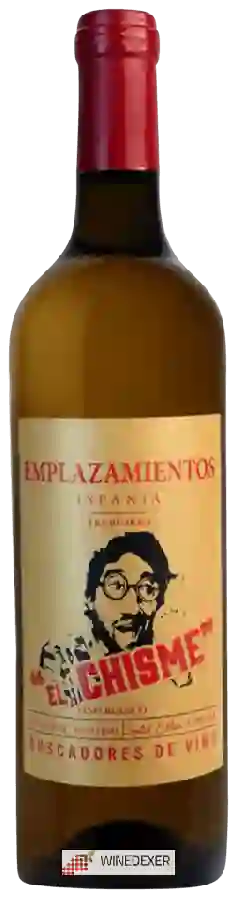
Winery Emplazamientos IspaniaEl Chisme Blanco
 White wine



This wine generally goes well with

Details and technical informations about Winery Emplazamientos Ispania's El Chisme Blanco.
Discover the grape variety: Gamay blanc
Supple and fruity whites to drink young, pale golden robe, airy palate with moderate acidity, signature aromas of white-fleshed fruits (apple, pear) and white flowers. Discreet Beaujolais profile. Now rare, grown in negligible quantities in Beaujolais and Mâconnais, used in artisanal micro-cuvées. White-skinned mutation of Gamay Noir, better known as Gamay Blanc Gloriod, obtained by Henri Gloriod in the 20th century.
Last vintages of this wine
The best vintages of El Chisme Blanco from Winery Emplazamientos Ispania are 0, 2018
Informations about the Winery Emplazamientos Ispania
The Winery Emplazamientos Ispania is one of of the world's greatest estates. It offers 12 wines for sale in the of Cádiz to come and discover on site or to buy online.

The wine region of Cádiz
Andalusian IGP around Jerez, Sanlúcar and Chiclana, mild Atlantic-influenced climate. Star soils: albariza (white chalky marl) and coastal sands. Still wines beyond Sherry. Whites: dry Palomino (apple, citrus, almond, salty iodine), floral Moscatel (grape, flowers), ample Pedro Ximénez, taut Chardonnay.
The wine region of Andalousie
Dry, sun-baked southern Spain, world cradle of fortified and oxidative wines. Sherry from Jerez is the signature: Palomino Fino under a veil of flor yields lively, saline Fino with signature notes of almond, yeast, green apple and a sharp iodine edge; more maritime Manzanilla (Sanlúcar); unveiled Oloroso in grand oxidation (walnut, caramel, tobacco). Pedro Ximénez from Montilla-Moriles: intense dark sweet (fig, raisin, coffee, molasses). Also muscat Málaga.
The word of the wine: Maceration
Prolonged contact and exchange between the juice and the grape solids, especially the skin. Not to be confused with the time of fermentation, which follows maceration. The juice becomes loaded with colouring matter and tannins, and acquires aromas. For a rosé, the maceration is short so that the colour does not "rise" too much. For white wines too, a "pellicular maceration" can be practised, which allows the wine to acquire more fat.