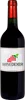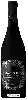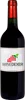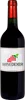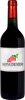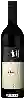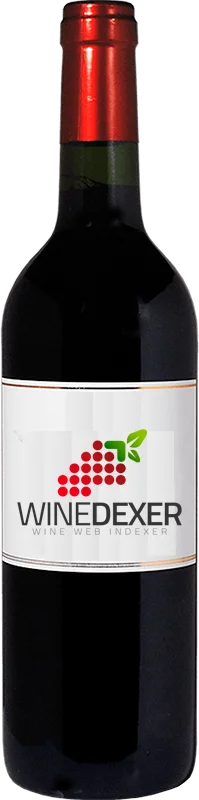
Winery ElfenhofBlaufränkisch Reserve Trocken
 Red wine



In the mouth this red wine is a powerful with a nice balance between acidity and tannins.
This wine generally goes well with poultry, beef or pasta.
Taste structure of the Blaufränkisch Reserve Trocken from the Winery Elfenhof
Light | Bold | |
Smooth | Tannic | |
Dry | Sweet | |
Soft | Acidic |
In the mouth the Blaufränkisch Reserve Trocken of Winery Elfenhof in the region of Weinland is a powerful with a nice balance between acidity and tannins.
Food and wine pairings with Blaufränkisch Reserve Trocken
Pairings that work perfectly with Blaufränkisch Reserve Trocken



Original food and wine pairings with Blaufränkisch Reserve Trocken
The Blaufränkisch Reserve Trocken of Winery Elfenhof matches generally quite well with dishes of beef, pasta or poultry such as recipes of caramelized beef with onions, pasta with asparagus and chicken or salmon koulibiac.
Details and technical informations about Winery Elfenhof's Blaufränkisch Reserve Trocken.
Discover the grape variety: Sylvaner
The sylvaner is grown mainly in Germany and Alsace. The buds are somewhat cottony and the young leaves are green. The same applies to the ribbed branches. Once mature, the dominant colour is golden-green and small elliptical berries with small to medium-sized bunches can be seen. The ripe fruit is then adorned by five-lobed leaves. This variety is susceptible to chlorosis, gray mold, powdery mildew and mildew. It is also sensitive to frost and wind because of its long branches. It can be grown in any kind of soil, although it prefers stony, sandy and light soils. It is indeed moderately acidic and offers a complex set of aromas such as bitter almond, fruity and floral background. The taste has an excellent mixture of honey and candied or dried fruits.
Last vintages of this wine
The best vintages of Blaufränkisch Reserve Trocken from Winery Elfenhof are 0
Informations about the Winery Elfenhof
The Winery Elfenhof is one of of the world's great estates. It offers 42 wines for sale in the of Burgenland to come and discover on site or to buy online.

The wine region of Burgenland
Burgenland is a large wine-producing region on the eastern border of Austria. Despite the country's image as the producer of some of the world's finest white wines, Austria is also home to a thriving red wine culture: Burgenland, with its sunny, continental summers, is the country's key red wine region, with its wines based mainly on the Blaufränkisch and Zweigelt grape varieties. Sweet, botrytized wines are also a specialty of the region, particularly in the Terroir surrounding the Neusiedlersee lake. The region occupies a narrow strip of land that runs from the Danube River down to Steiermark in the South.
The wine region of Weinland
Weinviertel DAC – whose name translates as "wine quarter" – is an appellation in Niederösterreich (Lower Austria). It is by far the largest Districtus Austriae Controllatus wine region in Austria. It was also the first Austrian wine region to be given that title, in 2002, with a DAC Reserve designation added in 2009. The designation applies only to white wines from the Grüner Veltliner Grape variety.
The word of the wine: Muscat blanc à petits grains
A white grape variety cultivated since antiquity on the shores of the Mediterranean, it is considered the noblest of the muscats. It is mainly used to make sweet wines, often from mutage. In France, it is the sole variety used in many natural sweet wines: muscat-de-frontignan, muscat-de-mireval, muscat-de-lunel, muscat-de-saint-jean-de-minervois, muscat-de-beaumes-de-venise, muscat-du-cap-corse. Combined with Muscat d'Alexandrie, it gives Muscat-de-Rivesaltes. It is also used to make sparkling white wines (clairette-de-die; moscato d'asti and asti spumante in Italy) and dry wines (alsace-muscat). Powerfully aromatic and complex, its wines evoke fresh grapes, roses, exotic fruits, citrus fruits and spices.