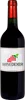
Winery El LomoListán Negro
 Red wine


In the mouth this red wine is a powerful with a nice freshness.
This wine generally goes well with poultry, beef or veal.
Taste structure of the Listán Negro from the Winery El Lomo
Light | Bold | |
Smooth | Tannic | |
Dry | Sweet | |
Soft | Acidic |
In the mouth the Listán Negro of Winery El Lomo in the region of Iles Canaries is a powerful with a nice freshness.
Wine flavors and olphactive analysis



On the nose the Listán Negro of Winery El Lomo in the region of Iles Canaries often reveals types of flavors of raspberry, non oak or earth and sometimes also flavors of microbio, oak or red fruit.
Food and wine pairings with Listán Negro
Pairings that work perfectly with Listán Negro



Original food and wine pairings with Listán Negro

The Listán Negro of Winery El Lomo matches generally quite well with dishes of beef, pasta or veal such as recipes of braised beef with carrots, fish with tamarind or deer stew.
Details and technical informations about Winery El Lomo's Listán Negro.
Discover the grape variety: Datal
Intraspecific crossing obtained in 1956 between the Beirut date palm and the Alexandria muscatel. This variety is not widely cultivated in France, although it is registered in the Official Catalogue of table grape varieties, list A1. It can be found in South Africa, Portugal, etc.
Last vintages of this wine

The best vintages of Listán Negro from Winery El Lomo are 1989, 2017, 2018
Informations about the Winery El Lomo
The Winery El Lomo is one of of the world's greatest estates. It offers 15 wines for sale in the of Iles Canaries to come and discover on site or to buy online.

The wine region of Iles Canaries
The archipelago of the Canary Islands (or Las Canarias) is an autonomous community of Spain located in the North Atlantic Ocean, 110 km from the west coast of Morocco. The wine trade there is far from famous - few local wines come out of the Canary Islands - but there is a Long and unique wine tradition in the region. The spectacularly high Canary Islands are located at a latitude of about 28°N, making it the most tropical wine region in Europe. It was thanks to this position, once traversed by naval trade routes, that the local wine industry flourished, shortly after the islands came under Spanish control in the early 15th century.
The word of the wine: Decanting
A sommelier uses a decanter to separate the clear wine from the solid parts in a bottle.