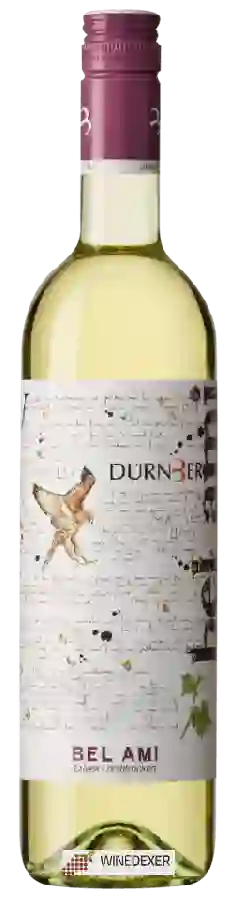
Winery DürnbergBel Ami Cuvée
 White wine



This wine generally goes well with

Wine flavors and olphactive analysis

Details and technical informations about Winery Dürnberg's Bel Ami Cuvée.
Discover the grape variety: Melon de Bourgogne
Dry, vivid and saline whites with a pale robe, slender mouthfeel and sharp acidity, with delicate aromas of citrus (lemon, grapefruit), green apple, white flowers, cut grass, iodine and marine mineral notes. Fine lees ageing adds richness and a brioche complexity. The absolute star of Muscadet AOC and Muscadet Sèvre-et-Maine AOC. An autochthonous Burgundian variety (Pinot Noir × Gouais Blanc), exiled to the Pays Nantais in the 17th century.
Last vintages of this wine
The best vintages of Bel Ami Cuvée from Winery Dürnberg are 0
Informations about the Winery Dürnberg
The Winery Dürnberg is one of of the world's great estates. It offers 67 wines for sale in the of Weinviertel to come and discover on site or to buy online.

The wine region of Weinviertel
Largest Austrian region (>50% of national Grüner Veltliner): signature white king as dry, light DAC with notes of citrus (lemon, grapefruit), green apple, stone fruits and the peppery "Pfefferl" signature (rotundone), lively acidity and a spicy finish — a straight aperitif. Lively Riesling, Welschriesling and Pinot Blanc to complete it. A few fruity Zweigelt reds. Vast Lower Austria plateau north of Vienna, continental climate, loess and limestone.
The wine region of Weinland
Vast German-speaking region in north-eastern Switzerland, the country's largest production area. Signature Pinot Noir (Blauburgunder): fine, fresh reds with notes of cherry, raspberry, undergrowth and sweet spices, silky tannins. Elegant, delicate style, often barrel-aged. Also light, floral Müller-Thurgau (Riesling-Sylvaner), lively, lemony native Räuschling, ample Pinot Gris.
The word of the wine: Drawing (liqueur de)
In champagne and sparkling wines of traditional method, addition to the wine, at the time of bottling (tirage) of sugars and yeasts dissolved in wine. These components will provoke the second fermentation in the bottle leading to the formation of carbon dioxide bubbles.


