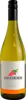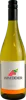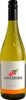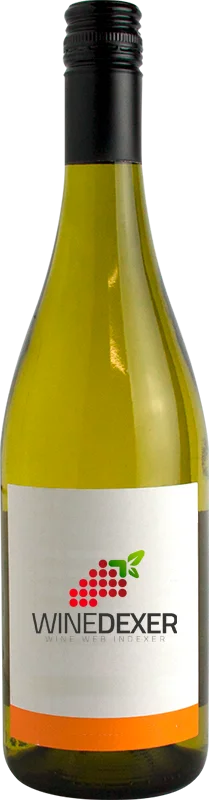
Winery DreikönigshofSilvaner Signum
 White wine
In the mouth this white wine is a with a nice freshness.
This wine generally goes well with pork, vegetarian or poultry.
Taste structure of the Silvaner Signum from the Winery Dreikönigshof
Light | Bold | |
Dry | Sweet | |
Soft | Acidic |
In the mouth the Silvaner Signum of Winery Dreikönigshof in the region of Rheinhessen is a with a nice freshness.
Food and wine pairings with Silvaner Signum
Pairings that work perfectly with Silvaner Signum



Original food and wine pairings with Silvaner Signum


The Silvaner Signum of Winery Dreikönigshof matches generally quite well with dishes of veal, pork or vegetarian such as recipes of veal escalope with marsala, rabbit stew the old fashioned way or tuna, pepper and tomato quiche.
Details and technical informations about Winery Dreikönigshof's Silvaner Signum.
Discover the grape variety: Seibel 6468
Direct producer hybrid obtained by Albert Seibel (1844/1936), interbreeding between 4614 Seibel and 3011 Seibel. The 6468 Seibel was not multiplied very much, today it is not present in the vineyard anymore. It should be noted that it has been used in many other crosses to obtain, among others, the Villard blanc, the date tree of Saint Vallier, etc.
Informations about the Winery Dreikönigshof
The Winery Dreikönigshof is one of of the world's great estates. It offers 15 wines for sale in the of Rheinhessen to come and discover on site or to buy online.

The wine region of Rheinhessen
Rheinhessen is Germany's largest region for producing the quality wines of the Qualitätswein bestimmter Anbaugebiete (QbA) and Prädikatswein designations, with roughly 26,500 hectares (65,000 acres) of Vineyard">Vineyards as of 2014. Many of its most significant viticultural areas are favorably influenced by the Rhine river, which runs aLong its North and eastern borders. The Rhine, along with the Nahe river to the west and the Haardt mountains to its South, form a natural border. Rheinhessen covers an area south of Rheingau, north of Pfalz and east of Nahe, and is located within the Rhineland-Palatinate federal state.
The word of the wine: Oxidative (breeding)
A method of ageing which aims to give the wine certain aromas of evolution (dried fruit, bitter orange, coffee, rancio, etc.) by exposing it to the air; it is then matured either in barrels, demi-muids or unoaked casks, sometimes stored in the open air, or in barrels exposed to the sun and to temperature variations. This type of maturation characterizes certain natural sweet wines, ports and other liqueur wines.