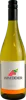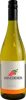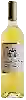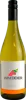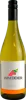
Winery Dourthe FreresChâteau Dumes Graves Supérieures
 White wine
This wine generally goes well with
Details and technical informations about Winery Dourthe Freres's Château Dumes Graves Supérieures.
Discover the grape variety: Chelois
Interspecific cross between 5163 Seibel (2 Gaillard x 2510 Seibel) and 5593 Seibel (880 Seibel x 4202 Seibel) obtained by Albert Seibel (1844-1936). The Chelois is related to the De Chaunac and the Chancellor. It has been propagated in Canada since 1946 and 1948 for the United States, in France it is no longer planted, therefore no longer present in the vineyard and almost disappearing.
Informations about the Winery Dourthe Freres
The Winery Dourthe Freres is one of of the world's great estates. It offers 76 wines for sale in the of Graves Supérieures to come and discover on site or to buy online.

The wine region of Graves Supérieures
The wine region of Graves Supérieures is located in the region of Graves of Bordeaux of France. Wineries and vineyards like the Château Haut-Bergeron or the Château Menota produce mainly wines sweet, white and red. The most planted grape varieties in the region of Graves Supérieures are Cabernet-Sauvignon, Merlot and Cabernet franc, they are then used in wines in blends or as a single variety. On the nose of Graves Supérieures often reveals types of flavors of apricot, ginger or petroleum and sometimes also flavors of dried fruit, floral or red fruit.
The wine region of Bordeaux
Bordeaux, in southwestern France, is one of the most famous, prestigious and prolific wine regions in the world. The majority of Bordeaux wines (nearly 90% of the production Volume) are the Dry, medium and Full-bodied red Bordeaux blends for which it is famous. The finest (and most expensive) are the wines of the great châteaux of Haut-Médoc and the right bank appellations of Saint-Émilion and Pomerol. The former focuses (at the highest level) on Cabernet Sauvignon, the latter on Merlot.
The word of the wine: Extraction
All the methods (pumping over, punching down) that allow the colour and tannins to be extracted from the grape skin during maceration, before fermentation begins. It is also possible to macerate after fermentation, but gently, so as not to extract the tannins from the seeds, which are greener. Because of its solvent power, alcohol favours extraction.