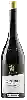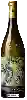
Winery Dornach1 Bianco
 White wine



In the mouth this white wine is a with a nice freshness.
This wine generally goes well with lean fish, shellfish or mature and hard cheese.
The 1 Bianco of the Winery Dornach is in the top 30 of wines of Trentino-Alto-Adige.
Taste structure of the 1 Bianco from the Winery Dornach
Light | Bold | |
Dry | Sweet | |
Soft | Acidic |
In the mouth the 1 Bianco of Winery Dornach in the region of Trentino-Alto-Adige is a with a nice freshness.
Wine flavors and olphactive analysis

On the nose the 1 Bianco of Winery Dornach in the region of Trentino-Alto-Adige often reveals types of flavors of earth, tree fruit.
Food and wine pairings with 1 Bianco
Pairings that work perfectly with 1 Bianco



Original food and wine pairings with 1 Bianco


The 1 Bianco of Winery Dornach matches generally quite well with dishes of pasta, shellfish or mature and hard cheese such as recipes of wok of chinese noodles with vegetables, chipirons / squids with tomato (basque country) or cold vegetable cake.
Details and technical informations about Winery Dornach's 1 Bianco.
Discover the grape variety: Len de l'el
This variety is most certainly from the Tarn region, more precisely from Gaillac, and is registered in the Official Catalogue of wine grape varieties, list A1. It is not found in any other French wine-growing region and is virtually unknown abroad.
Last vintages of this wine
The best vintages of 1 Bianco from Winery Dornach are 2018
Informations about the Winery Dornach
The Winery Dornach is one of of the world's greatest estates. It offers 21 wines for sale in the of Trentino-Alto-Adige to come and discover on site or to buy online.

The wine region of Trentino-Alto-Adige
Trentino-Alto Adige is Italy's northernmost wine region, located right on the border with Austria. Production was once dominated by the local red varieties Lagrein and Schiava. Now white wines are becoming more important in terms of Volume. Increasingly, they are made from internationally renowned Grape varieties such as Pinot Grigio and Chardonnay.
The word of the wine: Density per hectare
Number of vines per hectare. For the same yield, a vine planted with 3,000 vines per hectare bears many more bunches (per vine) than a vine planted with 10,000. The grapes will therefore be less rich in sugar and polyphenols (tannins, aromas...).