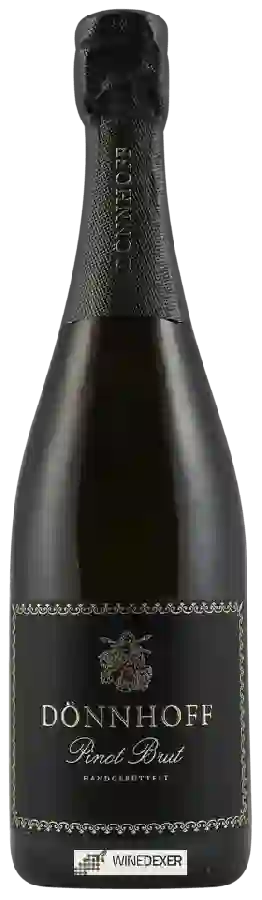
Winery DönnhoffPinot Brut
 Sparkling wine


This wine is a blend of 2 varietals which are the Pinot blanc and the Pinot noir.
This wine generally goes well with pork, poultry or veal.



Food and wine pairings with Pinot Brut
Pairings that work perfectly with Pinot Brut



Original food and wine pairings with Pinot Brut



The Pinot Brut of Winery Dönnhoff matches generally quite well with dishes of veal, pork or game (deer, venison) such as recipes of breaded veal cutlets, summer orecchiette or duck legs with green olives.
Details and technical informations about Winery Dönnhoff's Pinot Brut.
Discover the grape variety: Pinot blanc
Round, supple whites with a soft palate, showing discreet aromas of apple, pear, fresh almond, white flowers and brioche notes. Moderate acidity, light finish. Star of Crémant d'Alsace (fine, taut sparkling) and base of Edelzwicker. Grown in Germany (Weissburgunder, Baden-Württemberg), northern Italy (Pinot Bianco, Alto Adige), Austria and Luxembourg. A white mutation of Pinot Noir.
Last vintages of this wine
The best vintages of Pinot Brut from Winery Dönnhoff are 2013, 2014, 0
Informations about the Winery Dönnhoff
The Winery Dönnhoff is one of of the world's great estates. It offers 75 wines for sale in the of Nahe to come and discover on site or to buy online.

The wine region of Nahe
Homeland of a mineral Riesling of exceptional geological expression: lively, precise whites with notes of peach, citrus, green apple, gunflint and fine salinity, from taut dry to botrytised sweet. 75% whites, Riesling king (27%) complemented by round Pinot Gris and supple Pinot Blanc. Rising reds: silky Spätburgunder with red fruit, darker Dornfelder. 4,240 ha along the Nahe river, among the most diverse soils in Germany (180 formations).
The word of the wine: Reims Mountain
Between Épernay and Reims, a large limestone massif with varied soils and exposure where pinot noir reigns supreme. Ambonnay, Bouzy, Verzenay, Verzy, etc., are equivalent to the Burgundian Gevrey-Chambertin and Vosne-Romanée. There are also great Chardonnays, which are rarer (Mailly, Marmery, Trépail, Villers).