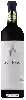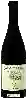
Château Dona BaissasRivesaltes Tuilé Hors d'Age
 Sweet wine


In the mouth this sweet wine is a powerful mainly marked by the residual sugar.
This wine generally goes well with beef, veal or pasta.
Taste structure of the Rivesaltes Tuilé Hors d'Age from the Château Dona Baissas
Light | Bold | |
Smooth | Tannic | |
Dry | Sweet | |
Soft | Acidic |
In the mouth the Rivesaltes Tuilé Hors d'Age of Château Dona Baissas in the region of Languedoc-Roussillon is a powerful mainly marked by the residual sugar.
Food and wine pairings with Rivesaltes Tuilé Hors d'Age
Pairings that work perfectly with Rivesaltes Tuilé Hors d'Age



Original food and wine pairings with Rivesaltes Tuilé Hors d'Age
The Rivesaltes Tuilé Hors d'Age of Château Dona Baissas matches generally quite well with dishes of beef, pasta or veal such as recipes of empanadas de carne (argentina), spaghetti with shrimp and cream or alsatian fondue.
Details and technical informations about Château Dona Baissas's Rivesaltes Tuilé Hors d'Age.
Discover the grape variety: Baco noir
It is the only vinifera-riparia that has been commercialized. It is the result of crossing the folle blanche with the riparia grand glabre created in 1902 by François Baco. Depending on the region, we can still find some small plots of black Baco vines often mixed with other varieties. You will also find trellises or arbors installed a long time ago in front of old houses and still maintained in a more than remarkable way thanks to the great vigour of this variety. It should be noted that there is also a white baco resulting from the crossing of the folle blanche by the noah and resembling much the latter.
Informations about the Château Dona Baissas
The Château Dona Baissas is one of of the world's greatest estates. It offers 15 wines for sale in the of Languedoc-Roussillon to come and discover on site or to buy online.

The wine region of Languedoc-Roussillon
Languedoc (formerly Coteaux du Languedoc) is a key appellation used in the Languedoc-Roussillon wine region of southern France. It covers Dry table wines of all three colors (red, white and rosé) from the entire region, but leaves Sweet and Sparkling wines to other more specialized appellations. About 75% of all Languedoc wines are red, with the remaining 25% split roughly down the middle between whites and rosés. The appellation covers most of the Languedoc region and almost a third of all the vineyards in France.
The word of the wine: Maderised
Term used to designate oxidized wines in reference to Madeira wines.