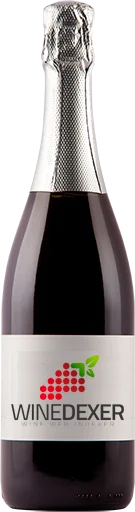
Winery Don LucianoCharmat Brut
 Sparkling wine


In the mouth this sparkling wine is a with fine and regular bubbles.
This wine generally goes well with appetizers and snacks, lean fish or shellfish.
Taste structure of the Charmat Brut from the Winery Don Luciano
Light | Bold | |
Soft | Acidic | |
Gentle | Fizzy |
In the mouth the Charmat Brut of Winery Don Luciano in the region of Castille-et-Léon is a with fine and regular bubbles.
Wine flavors and olphactive analysis

On the nose the Charmat Brut of Winery Don Luciano in the region of Castille-et-Léon often reveals types of flavors of citrus fruit.
Food and wine pairings with Charmat Brut
Pairings that work perfectly with Charmat Brut



Original food and wine pairings with Charmat Brut

The Charmat Brut of Winery Don Luciano matches generally quite well with dishes of shellfish, appetizers and snacks or lean fish such as recipes of cuttlefish in parsley sauce, tapenade or braids of sole and salmon with morels.
Details and technical informations about Winery Don Luciano's Charmat Brut.
Discover the grape variety: Airen
This is a very old variety that is still very present in Spain, and can also be found in Portugal, but is practically unknown in France. It is registered in the Official Catalogue of wine grape varieties list A.
Last vintages of this wine

The best vintages of Charmat Brut from Winery Don Luciano are 2013, 0
Informations about the Winery Don Luciano
The Winery Don Luciano is one of of the world's great estates. It offers 29 wines for sale in the of Castille-et-Léon to come and discover on site or to buy online.

The wine region of Castille-et-Léon
Cradle of great Castilian reds on high-altitude plateaus (450-1000 m) of the Duero. Tempranillo king (Tinto Fino, Tinta de Toro): powerful, structured reds with notes of black cherry, blackberry, plum, leather and spices, firm tannins and length worthy of long ageing. Stars: Ribera del Duero (Vega Sicilia, Pingus), fleshy Toro, Bierzo (fresh mineral Mencía). Lively herbaceous Verdejo whites from Rueda, cut grass and citrus.
The word of the wine: Deposit
Solid particles that can naturally coat the bottom of a bottle of wine. It is rather a guarantee that the wine has not been mistreated: in fact, to avoid the natural deposit, rather violent processes of filtration or cold passage (- 7 or - 8 °C) are used in order to precipitate the tartar (the small white crystals that some people confuse with crystallized sugar: just taste to dissuade you from it)