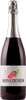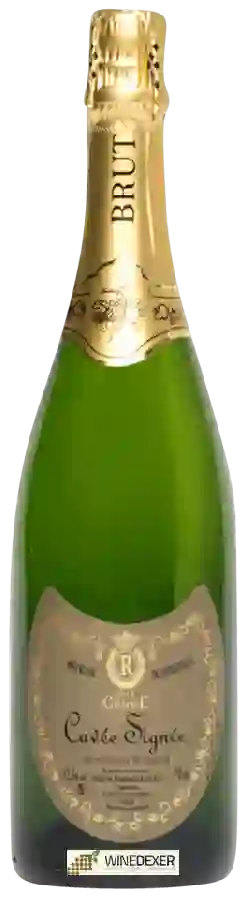
Domaine Raphael Luneau - R de la GrangeCuvée Signée
 Sparkling wine



This wine is a blend of 3 varietals which are the Chardonnay, the Folle blanche and the Gamay noir.
This wine generally goes well with pork, vegetarian or poultry.

Food and wine pairings with Cuvée Signée
Pairings that work perfectly with Cuvée Signée



Original food and wine pairings with Cuvée Signée


The Cuvée Signée of Domaine Raphael Luneau - R de la Grange matches generally quite well with dishes of beef, pork or rich fish (salmon, tuna etc) such as recipes of adapted vietnamese fondue, stuffed eggplant (with vegetables or mixed) or mexican salad with spicy dressing.
Details and technical informations about Domaine Raphael Luneau - R de la Grange's Cuvée Signée.
Discover the grape variety: Chardonnay
Whites with many faces: mineral and taut at Chablis (lemon, green apple, flint), opulent and buttery at Meursault and Puligny-Montrachet (hazelnut, brioche, yellow fruits), tense and chalky in Champagne (Blanc de Blancs). Also vinified sparkling and widely exported (Sonoma, Margaret River, Casablanca). A Burgundian variety, a cross of Pinot Noir × Gouais Blanc, half-sibling of Aligoté.
Informations about the Domaine Raphael Luneau - R de la Grange
The Domaine Raphael Luneau - R de la Grange is one of of the world's greatest estates. It offers 19 wines for sale in the of Loire Valley to come and discover on site or to buy online.

The wine region of Loire Valley
Kingdom of lively, dry whites and fine sparklers. Mineral, taut Sauvignon Blanc (Sancerre, Pouilly-Fumé) with citrus and gunflint notes. Multiform Chenin Blanc (Vouvray, Savennières, Layon): straight dry, floral off-dry or noble sweet honey-quince. Saline, iodised Muscadet (Melon B.
The word of the wine: Solera
A method of maturing practiced in Andalusia for certain sherries, which aims to continuously blend older and younger wines. It consists of stacking several layers of barrels; those located at ground level (solera) contain the oldest wines, the youngest being stored in the barrels on the upper level. The wine to be bottled is taken from the barrels on the lower level, which is replaced by younger wine from the upper level, and so on.