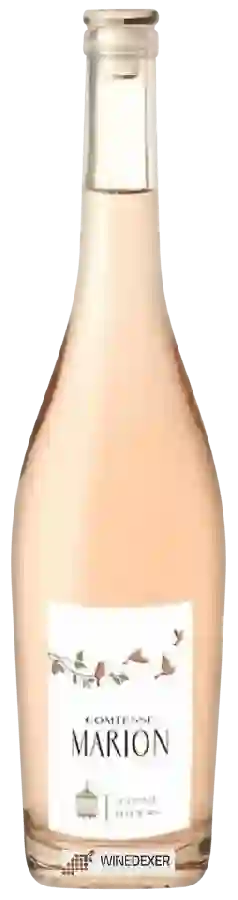
Domaine Preignes le Vieux - Maison Robert VicComtesse Marion Le Voyage
 Pink wine



This wine generally goes well with beef and mature and hard cheese.
Food and wine pairings with Comtesse Marion Le Voyage
Pairings that work perfectly with Comtesse Marion Le Voyage


Original food and wine pairings with Comtesse Marion Le Voyage
The Comtesse Marion Le Voyage of Domaine Preignes le Vieux - Maison Robert Vic matches generally quite well with dishes of beef or mature and hard cheese such as recipes of family potluck or casserole egg with saint-nectaire cheese.
Details and technical informations about Domaine Preignes le Vieux - Maison Robert Vic's Comtesse Marion Le Voyage.
Discover the grape variety: Aramon
Aramon noir is a grape variety that originated in France (Languedoc). It produces a variety of grape specially used for wine making. It is rare to find this grape to eat on our tables. This variety of grape is characterized by large bunches and very large grapes. Aramon noir can be found in several vineyards: South-West, Cognac, Bordeaux, Provence & Corsica, Rhone valley, Languedoc & Roussillon, Loire valley, Savoie & Bugey, Beaujolais.
Last vintages of this wine
The best vintages of Comtesse Marion Le Voyage from Domaine Preignes le Vieux - Maison Robert Vic are 2017, 2016, 2015
Informations about the Domaine Preignes le Vieux - Maison Robert Vic
The Domaine Preignes le Vieux - Maison Robert Vic is one of of the world's greatest estates. It offers 188 wines for sale in the of Pays d'Oc to come and discover on site or to buy online.

The wine region of Pays d'Oc
The single-grape IGP par excellence: modern, accessible, frank and fruity wines, the popular signature of the Midi. Spicy Syrah reds (pepper, blackberry), round Merlot, structured Cabernet, generous Grenache, supple Cinsault. Crisp, tangy rosés. Opulent Chardonnay whites, lively Sauvignon, floral, apricoty Viognier.
The word of the wine: Alcoholic fermentation
Transformation of sugars into alcohol under the effect of yeast. These yeasts exist in their natural state in the vineyards and in the cellars. Artificial seeding with selected yeasts is however very often practiced.