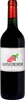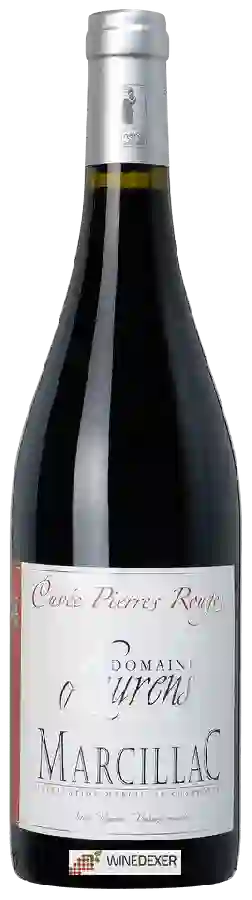
Domaine LaurensPierres Rouges
 Red wine



This wine generally goes well with

Wine flavors and olphactive analysis




On the nose the Pierres Rouges of Domaine Laurens in the region of South West often reveals types of flavors of vegetal, spices or green bell pepper.
Details and technical informations about Domaine Laurens's Pierres Rouges.
Discover the grape variety: Fer-servadou
Structured, spicy reds with a deep ruby robe, firm tannins and fresh acidity, showing characteristic aromas of red pepper, blackcurrant, raspberry, blackberry, black pepper, spices and herbal notes. Dense, distinctive palate with fine ageing potential. Star of Marcillac AOC and Estaing AOC in Aveyron, pillar of Gaillac AOC (as braucol) and Madiran AOC (as pinenc). Autochthonous South-West variety, identity signature of the great Aveyron reds.
Last vintages of this wine
The best vintages of Pierres Rouges from Domaine Laurens are 2017, 2014, 2018, 2015 and 2016.
Informations about the Domaine Laurens
The Domaine Laurens is one of of the world's greatest estates. It offers 15 wines for sale in the of Marcillac to come and discover on site or to buy online.

The wine region of Marcillac
Aveyron AOC in the Rouergue (200 ha north-west of Rodez, iron-oxide-rich "rougiers", clay-limestone soils, continental/oceanic/Mediterranean crossroads): Fer Servadou (local Mansois) is king in reds (≥80%, often 100%) — powerfully aromatic and spicy with red and black fruits, peppery and herbaceous notes, distinctive powerful tannins; the grape grown almost exclusively here. Cabernet Sauvignon and Merlot as complements. AOC 1990.
The wine region of South West
French mosaic of strong identities south of Bordeaux. Cahors and its Malbec ("black wine"): deep reds with notes of blackberry, plum, violet, tobacco and cocoa, firm tannins. Madiran and its dense, age-worthy Tannat. Jurançon whites: golden sweet (apricot, honey, pineapple) and lively dry from Petit Manseng.
The word of the wine: Rafle (taste of)
A taste considered a defect, characterized by an unpleasant astringency and bitterness, brought by the stalk during the vinification process. In order to avoid it, destemming before vinification is a common practice.