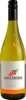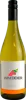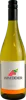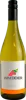
Winery FreyGneis Chardonnay Trocken
 White wine
In the mouth this white wine is a with a nice freshness.
This wine generally goes well with pork, vegetarian or poultry.

Taste structure of the Gneis Chardonnay Trocken from the Winery Frey
Light | Bold | |
Dry | Sweet | |
Soft | Acidic |
In the mouth the Gneis Chardonnay Trocken of Winery Frey in the region of Baden is a with a nice freshness.
Food and wine pairings with Gneis Chardonnay Trocken
Pairings that work perfectly with Gneis Chardonnay Trocken



Original food and wine pairings with Gneis Chardonnay Trocken

The Gneis Chardonnay Trocken of Winery Frey matches generally quite well with dishes of pork, rich fish (salmon, tuna etc) or vegetarian such as recipes of banh mi sandwich, garba ( ivory coast ) or vegan leek and tofu quiche.
Details and technical informations about Winery Frey's Gneis Chardonnay Trocken.
Discover the grape variety: Chardonnay
Whites with many faces: mineral and taut at Chablis (lemon, green apple, flint), opulent and buttery at Meursault and Puligny-Montrachet (hazelnut, brioche, yellow fruits), tense and chalky in Champagne (Blanc de Blancs). Also vinified sparkling and widely exported (Sonoma, Margaret River, Casablanca). A Burgundian variety, a cross of Pinot Noir × Gouais Blanc, half-sibling of Aligoté.
Informations about the Winery Frey
The Winery Frey is one of of the world's great estates. It offers 27 wines for sale in the of Baden to come and discover on site or to buy online.

The wine region of Baden
German capital of Pinot Noir (Spätburgunder): silky, fine reds with notes of red fruits, cherry, undergrowth and sweet spices, melted tannins. Round Grauburgunder (Pinot Gris), lively Weissburgunder, supple Müller-Thurgau, mineral Riesling. Germany's 3rd region (15,000 ha) in Baden-Württemberg facing Alsace, one of the country's warmest climates, volcanic soils at the Kaiserstuhl. Cradle of modern great German reds, elegant and fine.
The word of the wine: Oenologist
Specialist in wine-making techniques. It is a profession and not a passion: one can be an oenophile without being an oenologist (and the opposite too!). Formerly attached to the Faculty of Pharmacy, oenology studies have become independent and have their own university course. Learning to make wine requires a good chemical background but also, increasingly, a good knowledge of the plant. Some oenologists work in laboratories (analysis). Others, the consulting oenologists, work directly in the properties.