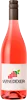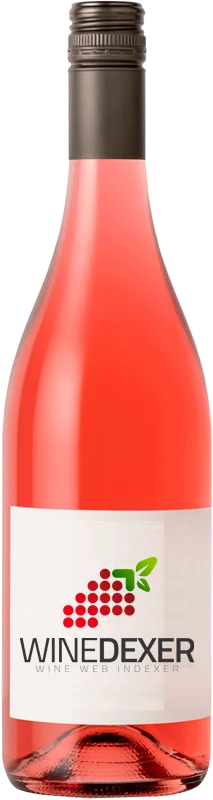
Domaine des JardinettesCollection Limitée Rosé
 Pink wine
In the mouth this pink wine is a powerful.
This wine generally goes well with pork, poultry or rich fish (salmon, tuna etc).
Taste structure of the Collection Limitée Rosé from the Domaine des Jardinettes
Light | Bold | |
Dry | Sweet | |
Soft | Acidic |
In the mouth the Collection Limitée Rosé of Domaine des Jardinettes in the region of Rhone Valley is a powerful.
Food and wine pairings with Collection Limitée Rosé
Pairings that work perfectly with Collection Limitée Rosé



Original food and wine pairings with Collection Limitée Rosé

The Collection Limitée Rosé of Domaine des Jardinettes matches generally quite well with dishes of pork, rich fish (salmon, tuna etc) or shellfish such as recipes of cabbage casserole, toasted bagel with smoked salmon or squid with garlic and parsley.
Details and technical informations about Domaine des Jardinettes's Collection Limitée Rosé.
Discover the grape variety: Vignoles
An interspecific cross obtained by Jean-François Ravat around 1930. Some people give it as parents the 6905 Seibel - or subéreux - and the pinot, to be confirmed however. It can still be found in North America and England, but is practically unknown in France.
Informations about the Domaine des Jardinettes
The Domaine des Jardinettes is one of of the world's greatest estates. It offers 13 wines for sale in the of Luberon to come and discover on site or to buy online.

The wine region of Luberon
The wine region of Luberon is located in the region of Rhône méridional of Rhone Valley of France. Wineries and vineyards like the Domaine Marrenon or the Maison Williams Chase produce mainly wines red, pink and white. The most planted grape varieties in the region of Luberon are Mourvèdre, Vermentino and Clairette, they are then used in wines in blends or as a single variety. On the nose of Luberon often reveals types of flavors of cherry, cinnamon or cassis and sometimes also flavors of dark chocolate, jam or coffee.
The wine region of Rhone Valley
The Rhone Valley is a key wine-producing region in Southeastern France. It follows the North-south course of the Rhône for nearly 240 km, from Lyon to the Rhône delta (Bouches-du-Rhône), near the Mediterranean coast. The Length of the valley means that Rhône wines are the product of a wide variety of soil types and mesoclimates. The viticultural areas of the region cover such a distance that there is a widely accepted division between its northern and southern parts.
The word of the wine: Deposit
Solid particles that can naturally coat the bottom of a bottle of wine. It is rather a guarantee that the wine has not been mistreated: in fact, to avoid the natural deposit, rather violent processes of filtration or cold passage (- 7 or - 8 °C) are used in order to precipitate the tartar (the small white crystals that some people confuse with crystallized sugar: just taste to dissuade you from it)