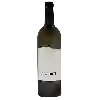
Domaine de LartigueCotes De Gascogne
 White wine
This wine generally goes well with vegetarian, rich fish (salmon, tuna etc) or shellfish.
Food and wine pairings with Cotes De Gascogne
Pairings that work perfectly with Cotes De Gascogne



Original food and wine pairings with Cotes De Gascogne
The Cotes De Gascogne of Domaine de Lartigue matches generally quite well with dishes of rich fish (salmon, tuna etc), shellfish or vegetarian such as recipes of salmon and parmesan quiche without pastry, fish pot or quiche with bacon and gruyère cheese.
Details and technical informations about Domaine de Lartigue's Cotes De Gascogne.
Discover the grape variety: Colombard
Colombard is one of the oldest grape varieties in the Charentes. This golden white grape variety is a cross between Chenin and Gouais. The young leaves of colombard are yellow with bronze patches. The adult leaves may be three-lobed or whole, depending on the variety. Its branches are cottony. The bunches of this variety are thick and cylindrical. Its elliptical berries are medium-sized. They change color until they ripen, ranging from greenish white to golden yellow. Colombard is associated with an average budding. It is particularly susceptible to leafhoppers, grape worms, mites, mildew, powdery mildew and gray mold. It is also sensitive to water stress, but is not very sensitive to wind. It ripens late in the second half of the year. There are a dozen approved clones of Colombard, the best known of which are 608, 607 and 606. This variety produces a full-bodied, fine white wine. Aromas of lime, nectarine, boxwood, citrus and exotic fruits are released.
Informations about the Domaine de Lartigue
The Domaine de Lartigue is one of of the world's greatest estates. It offers 4 wines for sale in the of Gascogne to come and discover on site or to buy online.

The wine region of Gascogne
Between the Landes forest, the Garonne and the Pyrenees, the Gascony hillsides cover the Gers dePartment and part of the Landes and Lot-et-Garonne departments. The vineyards occupy the same area as Armagnac, a brandy still produced in the region, but whose volumes have declined in favour of vins de pays (now PGI). Under the influence of a mild oceanic Climate, it is fairly wet in the west, drier in the east, especially in summer. In the west, the subsoil of tawny sands is of marine origin, covered with boulbènes; in the east, it gradually gives way to molasse, a rock resulting from the erosion of the Pyrenees.
The wine region of South West
The South-West is a large territorial area of France, comprising the administrative regions of Aquitaine, Limousin and Midi-Pyrénées. However, as far as the French wine area is concerned, the South-West region is a little less clear-cut, as it excludes Bordeaux - a wine region so productive that it is de facto an area in its own right. The wines of the South West have a Long and eventful history. The local rivers play a key role, as they were the main trade routes to bring wines from traditional regions such as Cahors, Bergerac, Buzet and Gaillac to their markets.
The word of the wine: Methuselah
Bottle with a capacity of 6 litres (synonymous with imperial).