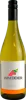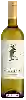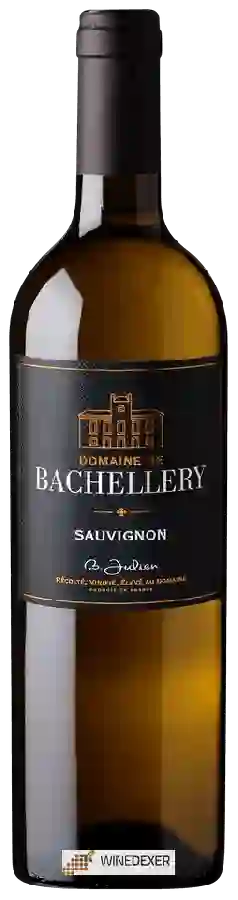
Domaine de BachellerySauvignon
 White wine


In the mouth this white wine is a with a nice freshness.
This wine generally goes well with vegetarian, poultry or lean fish.

Taste structure of the Sauvignon from the Domaine de Bachellery
Light | Bold | |
Dry | Sweet | |
Soft | Acidic |
In the mouth the Sauvignon of Domaine de Bachellery in the region of Pays d'Oc is a with a nice freshness.
Food and wine pairings with Sauvignon
Pairings that work perfectly with Sauvignon



Original food and wine pairings with Sauvignon


The Sauvignon of Domaine de Bachellery matches generally quite well with dishes of pasta, vegetarian or poultry such as recipes of pasta carbonara almost like the real thing, mushroom, bacon and gruyere quiche or wild asparagus omelette.
Details and technical informations about Domaine de Bachellery's Sauvignon.
Discover the grape variety: Counoise
Supple and fresh reds with a clear ruby colour, melted tannins and preserved acidity despite the sun, on aromas of strawberry, raspberry, red cherry, white pepper, garrigue and spiced notes. Airy and thirst-quenching palate. A traditional component of Châteauneuf-du-Pape AOC (one of the 13 authorised varieties), it brings freshness, finesse and aromatic complexity to southern blends of Côtes-du-Rhône and Languedoc. Native Rhône variety, very late-ripening.
Last vintages of this wine

The best vintages of Sauvignon from Domaine de Bachellery are 2016, 2015
Informations about the Domaine de Bachellery
The Domaine de Bachellery is one of of the world's great estates. It offers 18 wines for sale in the of Pays d'Oc to come and discover on site or to buy online.

The wine region of Pays d'Oc
The single-grape IGP par excellence: modern, accessible, frank and fruity wines, the popular signature of the Midi. Spicy Syrah reds (pepper, blackberry), round Merlot, structured Cabernet, generous Grenache, supple Cinsault. Crisp, tangy rosés. Opulent Chardonnay whites, lively Sauvignon, floral, apricoty Viognier.
The word of the wine: Effervescent
Any wine loaded with CO2 (carbon dioxide), which is revealed in the form of bubbles, reinforcing the freshness effect in the mouth. This gas production is the result of what is called the second fermentation in the bottle. It occurs in champagnes and sparkling wines such as crémants.