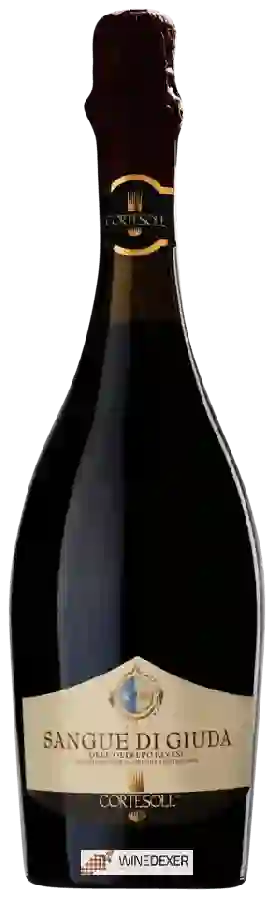
Winery Corte SoleSangue di Giuda
 Sparkling wine


This wine generally goes well with

Details and technical informations about Winery Corte Sole's Sangue di Giuda.
Discover the grape variety: Fiano blanc
Structured, aromatic dry whites with a pale golden colour, an ample palate and preserved acidity, showing signature aromas of white flowers (acacia, honeysuckle), yellow fruits (pear, peach), honey, hazelnut, almond and volcanic mineral notes. Fine ageing and cellaring potential. The absolute star of Fiano di Avellino DOCG in Campania, one of Italy's great whites. Indigenous Italian variety from Campania, one of the oldest in the south (Roman era).
Last vintages of this wine

The best vintages of Sangue di Giuda from Winery Corte Sole are 2013, 0, 2014, 2016
Informations about the Winery Corte Sole
The Winery Corte Sole is one of of the world's greatest estates. It offers 24 wines for sale in the of Oltrepò Pavese to come and discover on site or to buy online.

The wine region of Oltrepò Pavese
Little-known Lombardy, home of Italian Pinot Nero (3rd largest area worldwide). Refined Metodo Classico DOCG sparklers: fine bubbles with notes of apple, citrus, brioche and almond, taut finish. Also still red versions: fleshy Pinot Nero (cherry, undergrowth), fruity, slightly fizzy Bonarda, lively Croatina and bright Barbera. Mineral Riesling, sweet, musky Moscato in whites.
The wine region of Lombardia
Three poles. Franciacorta DOCG, Italy's answer to Champagne: elegant brioche traditional-method sparklers (Chardonnay, Pinot Noir, Pinot Blanc), fine bubble and mineral profile. Alpine Valtellina: Nebbiolo (alias Chiavennasca) with fine tannins and red fruits, powerful Sforzato passito. Oltrepò Pavese: fresh Pinot Noir and fruity-sparkling Bonarda.
The word of the wine: Presses
The juice that results from pressing the grapes after fermentation. At the end of the maceration, the vats are emptied, the first juice obtained is called the free-run wine and the marc remaining at the bottom of the vat is then pressed to give the press wine. We say more quickly "the presses". Their quality varies according to the vintage and the maceration. A too vigorous extraction releases the tannins of pips and the wine of press can then prove to be very astringent. Often the winemaker raises it separately, deciding later whether or not to incorporate it totally or partially into the grand vin.