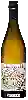
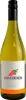
Winery BenzingerObersülzen Grauer Burgunder
 White wine



In the mouth this white wine is a with a nice freshness.
This wine generally goes well with vegetarian, shellfish or goat cheese.
Taste structure of the Obersülzen Grauer Burgunder from the Winery Benzinger
Light | Bold | |
Dry | Sweet | |
Soft | Acidic |
In the mouth the Obersülzen Grauer Burgunder of Winery Benzinger in the region of Pfalz is a with a nice freshness.
Food and wine pairings with Obersülzen Grauer Burgunder
Pairings that work perfectly with Obersülzen Grauer Burgunder



Original food and wine pairings with Obersülzen Grauer Burgunder
The Obersülzen Grauer Burgunder of Winery Benzinger matches generally quite well with dishes of shellfish, vegetarian or goat cheese such as recipes of shrimp, coconut and ginger soup, salmon and goat cheese quiche or round zucchini stuffed with bulgur and goat cheese.
Details and technical informations about Winery Benzinger's Obersülzen Grauer Burgunder.
Discover the grape variety: Cabernet_Dorio
Intraspecific crossing between the limberger and the dornfelder realized in 1971 by Bernard Hill of the Research Institute of Weinsberg in Germany. It can be found in Germany, Belgium and Switzerland, but is little known in France. Note that the cabernet-dorsa has the same parents.
Last vintages of this wine
The best vintages of Obersülzen Grauer Burgunder from Winery Benzinger are 0
Informations about the Winery Benzinger
The Winery Benzinger is one of of the world's great estates. It offers 67 wines for sale in the of Pfalz to come and discover on site or to buy online.

The wine region of Pfalz
Pfalz is a key wine producing region in western Germany, located between the Rhein/Rhine river and the low-lying Haardt mountain range (a natural continuation of the Alsatian Vosges). It covers a rectangle of land 45 miles (75km) Long and 15 miles (25km) wide. To the NorthLiesRheinhessen; to the South, the French border and Alsace. In terms of both quality and quantity, Pfalz is one of Germany's most important regions, and one which shows great promise for the future.
The word of the wine: Malolactic fermentation
Called second fermentation or malo for short. It is the degradation (under the effect of bacteria) of the malic acid naturally present in the wine into milder, less aggressive lactic acid. Some producers or wineries refuse this operation by "blocking the malo" (by cold and adding SO2) to keep a maximum of acidity which carries the aromas and accentuates the sensation of freshness.