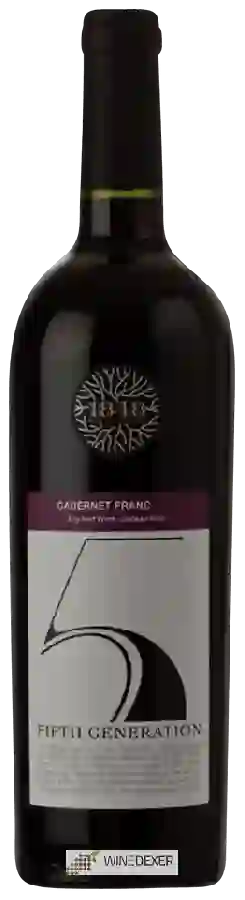
1848 WineryFifth Generation Cabernet Franc
 Red wine


This wine generally goes well with pork, poultry or beef.

Wine flavors and olphactive analysis




On the nose the Fifth Generation Cabernet Franc of 1848 Winery in the region of Judean Hills often reveals types of flavors of oak, red fruit.
Food and wine pairings with Fifth Generation Cabernet Franc
Pairings that work perfectly with Fifth Generation Cabernet Franc



Original food and wine pairings with Fifth Generation Cabernet Franc


The Fifth Generation Cabernet Franc of 1848 Winery matches generally quite well with dishes of beef, pork or game (deer, venison) such as recipes of puchero, savoyard pizza (cream base) or rabbit with cream sauce anne's way.
Details and technical informations about 1848 Winery's Fifth Generation Cabernet Franc.
Discover the grape variety: Cabernet franc
Supple, fragrant reds with fine tannins and vibrant freshness, showing raspberry, violet, green pepper, pencil lead and gentle spice aromas. Star of the Loire as a single variety (Chinon, Bourgueil, Saumur-Champigny) and of the right bank of Bordeaux in blends (Cheval Blanc at 60%). Also in semi-dry Anjou rosés. A historic Bordeaux variety, parent of Cabernet-Sauvignon, Merlot and Carmenère.
Last vintages of this wine
The best vintages of Fifth Generation Cabernet Franc from 1848 Winery are 2018, 2017, 2016, 0
Informations about the 1848 Winery
The 1848 Winery is one of of the world's greatest estates. It offers 28 wines for sale in the of Judean Hills to come and discover on site or to buy online.

The wine region of Judean Hills
Qualitative heart of Israeli wine around Jerusalem, the country's first official AO (2020). Dense, structured reds with signature notes of ripe blackcurrant, blackberry, mint, eucalyptus, Mediterranean herbs and spice, firm tannins and freshness tightened by altitude. Cabernet Sauvignon and Merlot in Bordeaux blends. Also peppery Syrah, dense Petit Verdot.
The word of the wine: Open
Said of a wine with a full and expressive nose, generally at its peak.