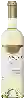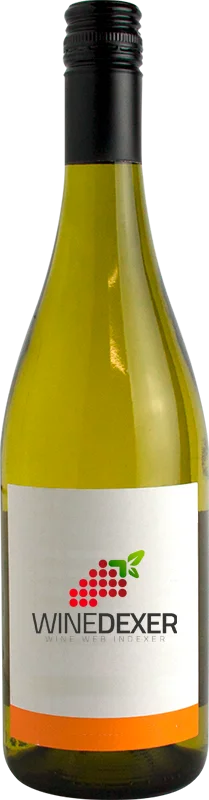
Winery Dom VicenteField Blend Branco
 White wine


In the mouth this white wine is a with a nice freshness.
This wine generally goes well with appetizers and snacks, lean fish or shellfish.
Taste structure of the Field Blend Branco from the Winery Dom Vicente
Light | Bold | |
Dry | Sweet | |
Soft | Acidic |
In the mouth the Field Blend Branco of Winery Dom Vicente in the region of Beiras is a with a nice freshness.
Food and wine pairings with Field Blend Branco
Pairings that work perfectly with Field Blend Branco



Original food and wine pairings with Field Blend Branco

The Field Blend Branco of Winery Dom Vicente matches generally quite well with dishes of shellfish, appetizers and snacks or lean fish such as recipes of spaghetti with clams, parmesan and poppy seed tuiles (5th meeting) or céteaux (la rochelle).
Details and technical informations about Winery Dom Vicente's Field Blend Branco.
Discover the grape variety: Johanniter
An interspecific cross between Riesling and FR 589-54 (Seyve-Villard 12481 x (pinot gris or rülander x chasselas or gutedel)) obtained in Germany in 1968 by Johannes Zimmermann. It has the particularity of having only one gene for resistance to mildew and powdery mildew. This variety can be found in Germany, Belgium, Switzerland, the Netherlands, etc. In France, it is practically unknown. Note that the "Johanniter" grape variety is a protected trademark.
Last vintages of this wine
The best vintages of Field Blend Branco from Winery Dom Vicente are 2017, 0
Informations about the Winery Dom Vicente
The Winery Dom Vicente is one of of the world's great estates. It offers 15 wines for sale in the of Dão to come and discover on site or to buy online.

The wine region of Dão
The wine region of Dão is located in the region of Beiras of Portugal. We currently count 316 estates and châteaux in the of Dão, producing 1397 different wines in conventional, organic and biodynamic agriculture. The wines of Dão go well with generally quite well with dishes .
The wine region of Beiras
Beiras (Beira) is a traditional administrative region in the northern half of Portugal. It is also the name of the IGP, or Indicacoes Geograficas Protegidas, wine classification (formerly known as Vinho Regional) which covers the region as a whole. A wide range of wines are made in Beiras – red wines from the region are typically Rich, deeply colored wines made from Baga, Castelão, Rufete (Tinto Pinheira), Merlot, Cabernet Sauvignon, Syrah and Touriga Nacional, and are sometimes fortified to emulate their more famous Oporto cousins. Whites are most often based on Fernão Pires and Bical, the latter being a small-berried variety with the affectionate nickname Borrado das Moscaos ('fly droppings').
The word of the wine: Chopine
Small bottle with a capacity of 50 centilitres.