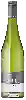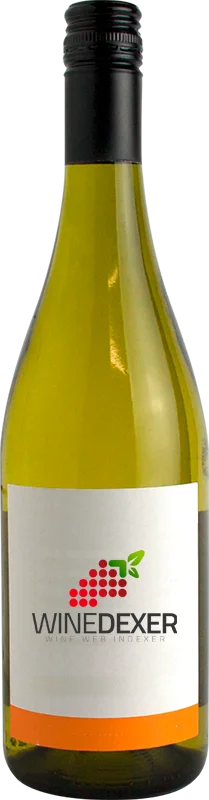
Winery WeberWeissburgunder Trocken
 White wine


In the mouth this white wine is a powerful with a nice freshness.
This wine generally goes well with rich fish (salmon, tuna etc), shellfish or mild and soft cheese.
Taste structure of the Weissburgunder Trocken from the Winery Weber
Light | Bold | |
Dry | Sweet | |
Soft | Acidic |
In the mouth the Weissburgunder Trocken of Winery Weber in the region of Nahe is a powerful with a nice freshness.
Wine flavors and olphactive analysis





On the nose the Weissburgunder Trocken of Winery Weber in the region of Nahe often reveals types of flavors of earth.
Food and wine pairings with Weissburgunder Trocken
Pairings that work perfectly with Weissburgunder Trocken



Original food and wine pairings with Weissburgunder Trocken

The Weissburgunder Trocken of Winery Weber matches generally quite well with dishes of rich fish (salmon, tuna etc), shellfish or mild and soft cheese such as recipes of pan-fried salmon with lemon and dill sauce, lobster and scallops on a bed of leeks or endive frichti.
Details and technical informations about Winery Weber's Weissburgunder Trocken.
Discover the grape variety: Kadarka
Some say that it originated in Hungary, while others say it came from Turkey via Bulgaria. Known in Austria and more generally in Eastern Europe (Albania, Croatia, Moldavia, Slovakia, Romania, Serbia, etc.), it is registered in the Official Catalogue of Wine Grape Varieties, list A1.
Last vintages of this wine
The best vintages of Weissburgunder Trocken from Winery Weber are 0
Informations about the Winery Weber
The Winery Weber is one of of the world's great estates. It offers 58 wines for sale in the of Nahe to come and discover on site or to buy online.

The wine region of Nahe
Nahe is one of the smaller German wine regions, named after the Nahe river which joins the Rhein at Rheinhessen/bingen">Bingen. The viticultural carea here is characterised by dramatic topography with steep slopes and craggy outcrops of metamorphic rock. Like most of the regions on or near the Rhine, its most prestigious wines are made from Riesling. There are around 4,000 hectares (10,000 acres) of Vineyards, spread across seven Grosslagen (wine districts) and over 300 Einzellagen (individual vineyard sites).
The word of the wine: Destemming
Operation consisting in eliminating the vegetal part of the bunch supporting the berries, its maceration with the must giving a herbaceous taste to the wine.