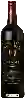
Winery De MourPrincesse Isabelle Bordeaux
 Red wine



This wine is a blend of 2 varietals which are the Cabernet-Sauvignon and the Merlot.
In the mouth this red wine is a powerful with a nice balance between acidity and tannins.
This wine generally goes well with poultry, beef or veal.

Taste structure of the Princesse Isabelle Bordeaux from the Winery De Mour
Light | Bold | |
Smooth | Tannic | |
Dry | Sweet | |
Soft | Acidic |
In the mouth the Princesse Isabelle Bordeaux of Winery De Mour in the region of Bordeaux is a powerful with a nice balance between acidity and tannins.
Food and wine pairings with Princesse Isabelle Bordeaux
Pairings that work perfectly with Princesse Isabelle Bordeaux



Original food and wine pairings with Princesse Isabelle Bordeaux

The Princesse Isabelle Bordeaux of Winery De Mour matches generally quite well with dishes of beef, veal or game (deer, venison) such as recipes of monkfish tail with white butter, normandy style escalope or duck stew with cahors wine.
Details and technical informations about Winery De Mour's Princesse Isabelle Bordeaux.
Discover the grape variety: Cabernet-Sauvignon
Structured, tannic reds, deeply coloured, with aromas of blackcurrant, blackberry, cedar, tobacco and graphite, underpinned by firm acidity and fine ageing potential. Cornerstone of the great Médoc estates (Pauillac, Saint-Estèphe, Saint-Julien) and signature of Napa Valley, Coonawarra and Maipo. The world's most planted red variety, a natural cross of Cabernet Franc x Sauvignon Blanc born in Bordeaux.
Last vintages of this wine
The best vintages of Princesse Isabelle Bordeaux from Winery De Mour are 2016
Informations about the Winery De Mour
The Winery De Mour is one of of the world's great estates. It offers 86 wines for sale in the of Bordeaux to come and discover on site or to buy online.

The wine region of Bordeaux
World-renowned age-worthy reds, led by round Merlot (plum, black fruit) or firm Cabernet Sauvignon (blackcurrant, cedar, graphite), blended with Cabernet Franc and Petit Verdot for tannic structure. Structured Médoc and Graves, velvety Saint-Émilion and Pomerol. Also crisp dry whites (Sauvignon/Sémillon) and opulent sweet Sauternes with honey and candied fruit. A 110,000 ha Gironde vineyard, 65 appellations, cradle of the 1855 classified growths.
The word of the wine: Density per hectare
Number of vines per hectare. For the same yield, a vine planted with 3,000 vines per hectare bears many more bunches (per vine) than a vine planted with 10,000. The grapes will therefore be less rich in sugar and polyphenols (tannins, aromas...).