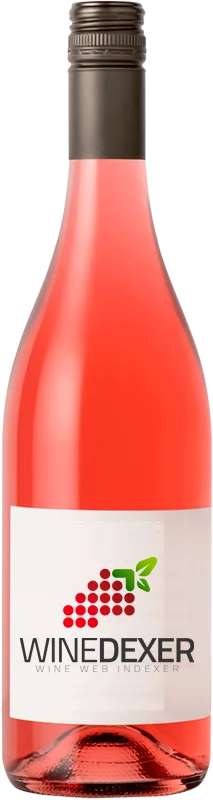
Winery CsanyiTeleki Villányi Rosé Cuvée
 Pink wine


This wine generally goes well with
Wine flavors and olphactive analysis

Details and technical informations about Winery Csanyi's Teleki Villányi Rosé Cuvée.
Discover the grape variety: Roi des noirs
Interspecific crossing between 29 Seibel (70 jeager x Vitis Vinifera unknown) and the danugue made by Eugène Contassot, who would have given the seeds of the harvested grapes to Albert Seibel (1844-1936). The King of the Blacks has been widely cultivated, particularly in southwestern France and in the center-west, where we have found and photographed it. It was used several times as a sire by Albert Seibel, rubilande or 11803 Seibel is a good example.
Last vintages of this wine

The best vintages of Teleki Villányi Rosé Cuvée from Winery Csanyi are 2012, 2014, 0, 2015 and 2013.
Informations about the Winery Csanyi
The Winery Csanyi is one of of the world's great estates. It offers 86 wines for sale in the of Villány to come and discover on site or to buy online.

The wine region of Villány
The wine region of Villány is located in the region of Dél-Pannónia of Hungary. We currently count 114 estates and châteaux in the of Villány, producing 854 different wines in conventional, organic and biodynamic agriculture. The wines of Villány go well with generally quite well with dishes .
The wine region of Dél-Pannónia
Hungary/eszak-dunantul/pannonhalma">Pannonhalma is a wine region in north-western Hungary. It constitutes the eastern corner of Transdanubia, the traditional region of Hungary which Lies across the Danube (trans danubia) from the Hungarian capital Budapest. As this corner of Hungary focuses mainly on red wine production, Pannonhalma's vineyards are planted mostly with the Bordeaux wine grapes Cabernet Sauvignon, Cabernet Franc, Merlot, as well as Burgundy's Pinot Noir. Pannonhalma is situated just south-east of Gyor, the regional capital of Gyor-Moson-Sopron county (of which Sopron makes up the western third), and the western Transdanubia region.
The word of the wine: Overmaturation
When the grapes reach maturity, the skin becomes permeable and progressively loses water, which causes a concentration phenomenon inside the berry. This is called over-ripening or passerillage.