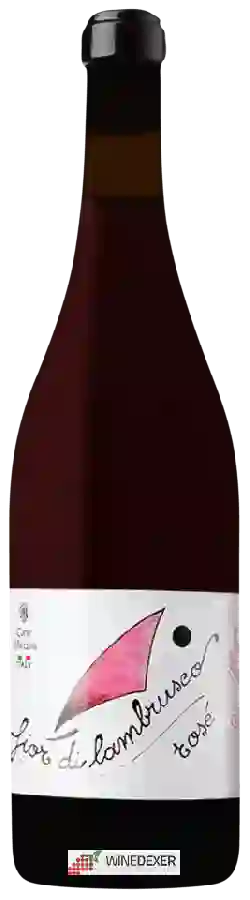
Winery Corte ManziniFior di Lambrusco Rosè
 wine
wine
This wine generally goes well with
The Fior di Lambrusco Rosè of the Winery Corte Manzini is in the top 0 of wines of Lambrusco Grasparossa di Castelvetro.

Details and technical informations about Winery Corte Manzini's Fior di Lambrusco Rosè.
Discover the grape variety: Rhoditis
Fresh, fruity whites and light rosés best enjoyed young, with a pale salmon robe, an airy palate with preserved acidity, and signature aromas of citrus (lemon), green apple, white flowers and herbal notes. Also the traditional base for resinated Retsina. Grown in the Peloponnese, Macedonia and Attica for modern dry Greek whites. Greek autochthonous grey grape with pink skin, one of the most planted varieties in Greece.
Last vintages of this wine



The best vintages of Fior di Lambrusco Rosè from Winery Corte Manzini are 0
Informations about the Winery Corte Manzini
The Winery Corte Manzini is one of of the world's greatest estates. It offers 8 wines for sale in the of Lambrusco Grasparossa di Castelvetro to come and discover on site or to buy online.

The wine region of Lambrusco Grasparossa di Castelvetro
DOC southwest of Modena in Emilia-Romagna, clay-limestone hills softened by the Apennines. Signature Lambrusco Grasparossa (85% min) as the fullest-bodied and most tannic sparkling red of the Lambrusco family. Fine bubble, deep ruby robe, dry to off-dry, with notes of blackberry, violet, black cherry, wild strawberry, herbs and spices, present tannins and fresh palate — lively and indulgent. Etruscan origins.
The wine region of Emilia-Romagna
Kingdom of Lambrusco: fresh, fruity sparkling reds (blackberry, cherry, violet), from gourmet dry to convivial off-dry, perfect with local charcuterie. World's best-selling sparkling wine on the Emilia side (Sorbara, Grasparossa, Salamino). East, Romagna: supple fruity Sangiovese, Albana (Italy's 1st white DOCG, 1987) ample and almondy. Also red Gutturnio and white Pignoletto.
The word of the wine: Vatting
After five to eight days of alcoholic fermentation, it is possible to prolong the maceration in order to extract the maximum amount of matter from the marc. The wines obtained in this way are rich and full-bodied, and in principle are intended for laying down.