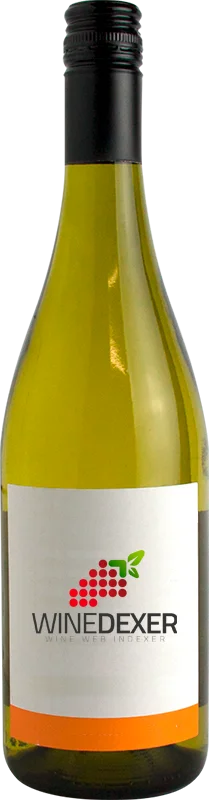
Winery ClairvauxSauvignon Blanc
 White wine
In the mouth this white wine is a powerful with a nice freshness.
This wine generally goes well with vegetarian, shellfish or goat cheese.
Taste structure of the Sauvignon Blanc from the Winery Clairvaux
Light | Bold | |
Dry | Sweet | |
Soft | Acidic |
In the mouth the Sauvignon Blanc of Winery Clairvaux in the region of Western Cape is a powerful with a nice freshness.
Food and wine pairings with Sauvignon Blanc
Pairings that work perfectly with Sauvignon Blanc



Original food and wine pairings with Sauvignon Blanc
The Sauvignon Blanc of Winery Clairvaux matches generally quite well with dishes of shellfish, vegetarian or goat cheese such as recipes of mie goreng, quiche with leeks and fresh salmon from flo or sweet and savoury eggplant/goat tart.
Details and technical informations about Winery Clairvaux's Sauvignon Blanc.
Discover the grape variety: Narince
This grape variety is native to Turkey, where it is very well known and highly appreciated. In this country, it is very often grown at high altitudes. It is believed to be the result of a natural intraspecific cross between Dimrit Kara and Kalecik Karasi. Almost unknown in France, it is no more so in other wine-producing countries.
Informations about the Winery Clairvaux
The Winery Clairvaux is one of of the world's greatest estates. It offers 9 wines for sale in the of Western Cape to come and discover on site or to buy online.

The wine region of Western Cape
The Western Cape is home to the vast majority of the South African wine industry, and the country's two most famous wine regions, Stellenbosch and Paarl. The city of Cape Town serves as the epicenter of the Cape Winelands, a mountainous, biologically diverse area in the south-western corner of the African continent. A wide variety of wines are produced here. Wines from the Shiraz and Pinotage">Pinotage grape varieties can be fresh and juicy or Full-bodied and gutsy.
The word of the wine: Reserve wine (champagne)
Older wines, kept in vats or aged in wood in some houses, or kept in magnums at Bollinger. A small percentage of these wines are used in the blending of non-vintage wines in order to bring greater aromatic complexity.