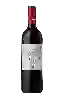
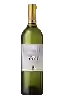
Château RoquefortBordeaux Blanc
 White wine



In the mouth this white wine is a powerful with a nice freshness.
This wine generally goes well with pork, vegetarian or poultry.
Taste structure of the Bordeaux Blanc from the Château Roquefort
Light | Bold | |
Dry | Sweet | |
Soft | Acidic |
In the mouth the Bordeaux Blanc of Château Roquefort in the region of Bordeaux is a powerful with a nice freshness.
Wine flavors and olphactive analysis






On the nose the Bordeaux Blanc of Château Roquefort in the region of Bordeaux often reveals types of flavors of pineapple, grapefruit or citrus and sometimes also flavors of peach, minerality or pear.
Food and wine pairings with Bordeaux Blanc
Pairings that work perfectly with Bordeaux Blanc



Original food and wine pairings with Bordeaux Blanc


The Bordeaux Blanc of Château Roquefort matches generally quite well with dishes of pork, vegetarian or poultry such as recipes of ham with leek fondue, nanie's diced ham quiche or quick brioche sausage.
Details and technical informations about Château Roquefort's Bordeaux Blanc.
Discover the grape variety: Grassen
Grassen noir is a grape variety that originated in France (Provence). It produces a variety of grape specially used for wine making. It is rare to find this grape to eat on our tables. Grassen noir can be found grown in these vineyards: South West, Cognac, Bordeaux, Provence & Corsica, Rhone Valley.
Last vintages of this wine
The best vintages of Bordeaux Blanc from Château Roquefort are 2014, 2010, 2017, 2015 and 2013.
Informations about the Château Roquefort
The Château Roquefort is one of of the world's greatest estates. It offers 14 wines for sale in the of Bordeaux to come and discover on site or to buy online.

The wine region of Bordeaux
Bordeaux, in southwestern France, is one of the most famous, prestigious and prolific wine regions in the world. The majority of Bordeaux wines (nearly 90% of the production Volume) are the Dry, medium and Full-bodied red Bordeaux blends for which it is famous. The finest (and most expensive) are the wines of the great châteaux of Haut-Médoc and the right bank appellations of Saint-Émilion and Pomerol. The former focuses (at the highest level) on Cabernet Sauvignon, the latter on Merlot.
The word of the wine: Tanin
A natural compound contained in the skin of the grape, the seed or the woody part of the bunch, the stalk. The maceration of red wines allows the extraction of tannins, which give the texture, the solidity and also the mellowness when the tannins are "ripe". The winemaker seeks above all to extract the tannins from the skin, the ripest and most noble. The tannins of the seed or stalk, which are "greener", especially in average years, give the wine hardness and astringency. The wines of Bordeaux (based on Cabernet and Merlot) are full of tannins, those of Burgundy much less so, with Pinot Noir containing little.