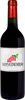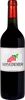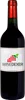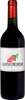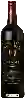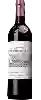
Château La PerousePremieres Cotes De Blaye
 Red wine


In the mouth this red wine is a powerful with a nice balance between acidity and tannins.
This wine generally goes well with poultry, beef or veal.
Taste structure of the Premieres Cotes De Blaye from the Château La Perouse
Light | Bold | |
Smooth | Tannic | |
Dry | Sweet | |
Soft | Acidic |
In the mouth the Premieres Cotes De Blaye of Château La Perouse in the region of Bordeaux is a powerful with a nice balance between acidity and tannins.
Food and wine pairings with Premieres Cotes De Blaye
Pairings that work perfectly with Premieres Cotes De Blaye



Original food and wine pairings with Premieres Cotes De Blaye

The Premieres Cotes De Blaye of Château La Perouse matches generally quite well with dishes of beef, veal or game (deer, venison) such as recipes of vegetable noddles, potjevleesch (meat in a pot) or rabbit with homemade mustard.
Details and technical informations about Château La Perouse's Premieres Cotes De Blaye.
Discover the grape variety: Tzolikoouri
Most certainly finding its first origins in Georgia. It can be found in Italy, Germany, Slovak Republic, Ukraine, Republic of Moldova, Czech Republic, Romania, Bulgaria, Russia, ... in France, it is practically unknown.
Informations about the Château La Perouse
The Château La Perouse is one of of the world's greatest estates. It offers 6 wines for sale in the of Bordeaux to come and discover on site or to buy online.

The wine region of Bordeaux
Bordeaux, in southwestern France, is one of the most famous, prestigious and prolific wine regions in the world. The majority of Bordeaux wines (nearly 90% of the production Volume) are the Dry, medium and Full-bodied red Bordeaux blends for which it is famous. The finest (and most expensive) are the wines of the great châteaux of Haut-Médoc and the right bank appellations of Saint-Émilion and Pomerol. The former focuses (at the highest level) on Cabernet Sauvignon, the latter on Merlot.
The word of the wine: Old vines
There are no specific regulations governing the term "vieilles vignes". After 20 to 25 years, the yields stabilize and tend to decrease, the vines are deeply rooted, and the grapes that come from them give richer, more concentrated, more sappy wines, expressing with more nuance the characteristics of their terroir. It is possible to find plots of vines that claim to be a century old.