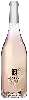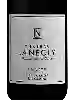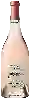
Château la NéglyTradition Rosé
 Pink wine
In the mouth this pink wine is a with a nice freshness.
This wine generally goes well with vegetarian, appetizers and snacks or lean fish.
Taste structure of the Tradition Rosé from the Château la Négly
Light | Bold | |
Dry | Sweet | |
Soft | Acidic |
In the mouth the Tradition Rosé of Château la Négly in the region of Languedoc-Roussillon is a with a nice freshness.
Food and wine pairings with Tradition Rosé
Pairings that work perfectly with Tradition Rosé



Original food and wine pairings with Tradition Rosé


The Tradition Rosé of Château la Négly matches generally quite well with dishes of pasta, vegetarian or appetizers and snacks such as recipes of pasta with basil, zucchini quiche or seed crackers.
Details and technical informations about Château la Négly's Tradition Rosé.
Discover the grape variety: Mérille
Originally from the Tarn-et-Garonne, the merille is a member of the cotoïdes family. It has long occupied the vineyards of Bergerac. It is often planted with négrette N or côt N. Nowadays, it is only grown on a hundred hectares in all. The young leaves of the Merille are heart-shaped. Its bunches are larger than average. The berries are bluish-black in colour and are also large and tightly packed. Merillas are associated with a regular and high production. It is often exposed to attacks by grape worms, leafhoppers and mites. It also fears grey rot but is not very sensitive to powdery mildew and mildew. This variety has 3 approved clones, not yet multiplied, namely 790, 445 and 444. It does not like soils with excessive humidity. It buds early and ripens later. Merille produces a light, not very aromatic, flat and simple wine.
Informations about the Château la Négly
The Château la Négly is one of of the world's great estates. It offers 44 wines for sale in the of Languedoc to come and discover on site or to buy online.

The wine region of Languedoc
Languedoc (formerly Coteaux du Languedoc) is a key appellation used in the Languedoc-Roussillon wine region of southern France. It covers Dry table wines of all three colors (red, white and rosé) from the entire region, but leaves Sweet and Sparkling wines to other more specialized appellations. About 75% of all Languedoc wines are red, with the remaining 25% split roughly down the middle between whites and rosés. The appellation covers most of the Languedoc region and almost a third of all the vineyards in France.
The wine region of Languedoc-Roussillon
Languedoc (formerly Coteaux du Languedoc) is a key appellation used in the Languedoc-Roussillon wine region of southern France. It covers Dry table wines of all three colors (red, white and rosé) from the entire region, but leaves Sweet and Sparkling wines to other more specialized appellations. About 75% of all Languedoc wines are red, with the remaining 25% split roughly down the middle between whites and rosés. The appellation covers most of the Languedoc region and almost a third of all the vineyards in France.
The word of the wine: R-M (champagne)
Harvesting and handling. It is the artisan winemaker. He elaborates his own champagne, often a monocru representative of the village or the surrounding villages.