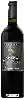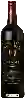
Château FayauCuvée Reservée Rouge
 Red wine
In the mouth this red wine is a powerful with a nice balance between acidity and tannins.
This wine generally goes well with poultry, beef or veal.
Taste structure of the Cuvée Reservée Rouge from the Château Fayau
Light | Bold | |
Smooth | Tannic | |
Dry | Sweet | |
Soft | Acidic |
In the mouth the Cuvée Reservée Rouge of Château Fayau in the region of Bordeaux is a powerful with a nice balance between acidity and tannins.
Food and wine pairings with Cuvée Reservée Rouge
Pairings that work perfectly with Cuvée Reservée Rouge



Original food and wine pairings with Cuvée Reservée Rouge

The Cuvée Reservée Rouge of Château Fayau matches generally quite well with dishes of beef, veal or game (deer, venison) such as recipes of oxtail with seed sauce, veal shoulder with cream and tarragon or rabbit with tomato.
Details and technical informations about Château Fayau's Cuvée Reservée Rouge.
Discover the grape variety: Counoise
Counoise is a black grape variety of Spanish origin. It is widely cultivated in the southern part of France. It is very similar to the aubun, with which it is often confused, and has a white cottony bud. Unlike the aubun, the leaves of this variety do not have teeth in the petiolar sinus. They are thick and large. Its bunches are medium-sized but its berries are large. It is advisable to prune it short so that it is productive. It matures in the second half of the year, but production depends on the vintage. This grape variety appreciates hillside terroirs, which are stony and warm. It fears grey rot without being sensitive to oidium and mildew. Counoise has two approved clones, 508 and 725. The wine obtained from Counoise is not very colourful. It is fine and fruity. Its aromas are diversified with notes of fruit, flowers and spices.
Informations about the Château Fayau
The Château Fayau is one of of the world's great estates. It offers 16 wines for sale in the of Bordeaux to come and discover on site or to buy online.

The wine region of Bordeaux
Bordeaux, in southwestern France, is one of the most famous, prestigious and prolific wine regions in the world. The majority of Bordeaux wines (nearly 90% of the production Volume) are the Dry, medium and Full-bodied red Bordeaux blends for which it is famous. The finest (and most expensive) are the wines of the great châteaux of Haut-Médoc and the right bank appellations of Saint-Émilion and Pomerol. The former focuses (at the highest level) on Cabernet Sauvignon, the latter on Merlot.
The word of the wine: Breaking
Accident (oxidation or reduction) causing a loss of limpidity of the wine.