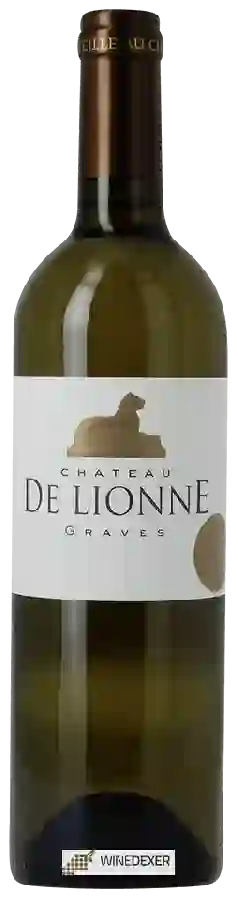
Château de LionneGraves Blanc
 White wine



In the mouth this white wine is a powerful.
This wine generally goes well with pork, vegetarian or poultry.

Taste structure of the Graves Blanc from the Château de Lionne
Light | Bold | |
Dry | Sweet | |
Soft | Acidic |
In the mouth the Graves Blanc of Château de Lionne in the region of Bordeaux is a powerful.
Wine flavors and olphactive analysis



On the nose the Graves Blanc of Château de Lionne in the region of Bordeaux often reveals types of flavors of peach, lemon or non oak and sometimes also flavors of oak, tree fruit or spices.
Food and wine pairings with Graves Blanc
Pairings that work perfectly with Graves Blanc



Original food and wine pairings with Graves Blanc


The Graves Blanc of Château de Lionne matches generally quite well with dishes of pork, vegetarian or poultry such as recipes of quiche with mixed vegetables, leek, goat cheese and bacon quiche or mushroom, bacon and gruyere quiche.
Details and technical informations about Château de Lionne's Graves Blanc.
Discover the grape variety: Black Monukka
Table grape with long bunches and elongated seedless (pipless) blue-black berries, thin skin and crunchy sweet flesh, with a soft, fruity flavour. Very rarely vinified. Grown in Central Asia, the Mediterranean, California and South Africa for fresh consumption, also used for premium raisins. Very old seedless black table grape variety, probably originating from Central Asia.
Last vintages of this wine
The best vintages of Graves Blanc from Château de Lionne are 2016, 2015
Informations about the Château de Lionne
The Château de Lionne is one of of the world's greatest estates. It offers 4 wines for sale in the of Graves to come and discover on site or to buy online.

The wine region of Graves
Historic cradle of Bordeaux wine, left bank south of the city. Structured reds on siliceous gravel: firm cassis-laden Cabernet Sauvignon, velvety Merlot, perfumed Cabernet Franc, signature notes of black fruit, smoke, graphite and cigar box. Elegant dry whites blending Sauvignon (citrus, boxwood, freshness) and Sémillon (wax, honey, richness with ageing), among Bordeaux's longest-lived. Also sweet Graves Supérieures.
The wine region of Bordeaux
World-renowned age-worthy reds, led by round Merlot (plum, black fruit) or firm Cabernet Sauvignon (blackcurrant, cedar, graphite), blended with Cabernet Franc and Petit Verdot for tannic structure. Structured Médoc and Graves, velvety Saint-Émilion and Pomerol. Also crisp dry whites (Sauvignon/Sémillon) and opulent sweet Sauternes with honey and candied fruit. A 110,000 ha Gironde vineyard, 65 appellations, cradle of the 1855 classified growths.
The word of the wine: Cinsault
Cinsault is a southern black grape variety that can be found in the blends of most Mediterranean appellations, but most often as an accessory grape variety. It is undoubtedly most present in certain rosé wines (in Corbières, Côtes-de-Provence, etc.): it gives these wines highly appreciated aromas of strawberry, peach and raspberry. In vin de pays (IGP), it is often vinified on its own, usually as a rosé.


