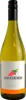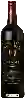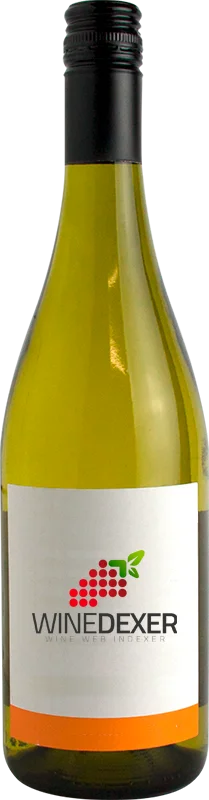
Château de LestiacBordeaux Blanc
 White wine
This wine generally goes well with pork, vegetarian or poultry.
Food and wine pairings with Bordeaux Blanc
Pairings that work perfectly with Bordeaux Blanc



Original food and wine pairings with Bordeaux Blanc


The Bordeaux Blanc of Château de Lestiac matches generally quite well with dishes of pork, vegetarian or poultry such as recipes of brazilian feijoada, light tuna-tomato quiche (without cream) or turkey stuffed with chestnuts.
Details and technical informations about Château de Lestiac's Bordeaux Blanc.
Discover the grape variety: Couderc noir
Natural interspecific crossing between Jaeger 70 (Vitis Rupestris x Vitis Lincecumii) and an unknown Vitis Vinifera discovered by Eugène Contassot, the seeds from this crossing having been offered to/seeded by Georges Couderc. This direct-producing hybrid was the most widely planted, particularly in the south of France. There are still a few strains in production today, but it is practically no longer multiplied, although it is registered in the Official Catalogue of Vine Varieties, list A1. - Synonymy: Couderc 7120, Contassot 20 (for all the synonyms of the varieties, click here!).
Informations about the Château de Lestiac
The Château de Lestiac is one of of the world's greatest estates. It offers 9 wines for sale in the of Bordeaux to come and discover on site or to buy online.

The wine region of Bordeaux
Bordeaux, in southwestern France, is one of the most famous, prestigious and prolific wine regions in the world. The majority of Bordeaux wines (nearly 90% of the production Volume) are the Dry, medium and Full-bodied red Bordeaux blends for which it is famous. The finest (and most expensive) are the wines of the great châteaux of Haut-Médoc and the right bank appellations of Saint-Émilion and Pomerol. The former focuses (at the highest level) on Cabernet Sauvignon, the latter on Merlot.
The word of the wine: Deposit
Solid particles that can naturally coat the bottom of a bottle of wine. It is rather a guarantee that the wine has not been mistreated: in fact, to avoid the natural deposit, rather violent processes of filtration or cold passage (- 7 or - 8 °C) are used in order to precipitate the tartar (the small white crystals that some people confuse with crystallized sugar: just taste to dissuade you from it)