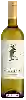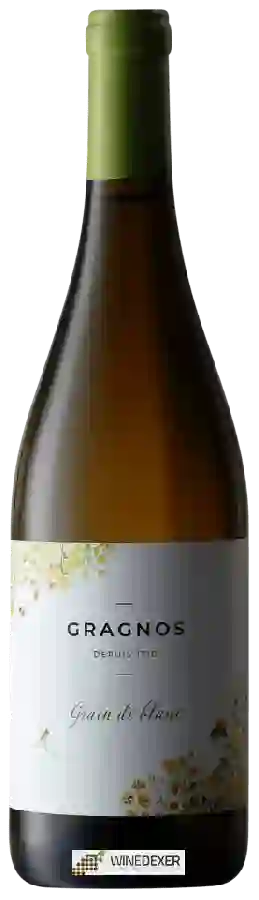
Château de GragnosGrains de Blanc
 White wine


In the mouth this white wine is a .
This wine generally goes well with vegetarian, poultry or lean fish.

Taste structure of the Grains de Blanc from the Château de Gragnos
Light | Bold | |
Dry | Sweet | |
Soft | Acidic |
In the mouth the Grains de Blanc of Château de Gragnos in the region of Pays d'Oc is a .
Food and wine pairings with Grains de Blanc
Pairings that work perfectly with Grains de Blanc



Original food and wine pairings with Grains de Blanc


The Grains de Blanc of Château de Gragnos matches generally quite well with dishes of pasta, vegetarian or poultry such as recipes of spaghetti neapolitan style, light tuna-tomato quiche (without cream) or moroccan chicken tagine.
Details and technical informations about Château de Gragnos's Grains de Blanc.
Discover the grape variety: Arbane
Elegant, taut sparkling whites with a pale golden robe, a nervous palate and a razor-sharp acidity of refined citrus (lemon), green apple, white flowers (acacia), pear and chalky mineral notes. Fine ageing potential. A traditional minor component of Champagne AOC (one of 7 authorised grapes), preserved by growers attached to historic heritage. Rare native French grape of the Aube, a forgotten Champenois signature.
Informations about the Château de Gragnos
The Château de Gragnos is one of of the world's greatest estates. It offers 11 wines for sale in the of Pays d'Oc to come and discover on site or to buy online.

The wine region of Pays d'Oc
The single-grape IGP par excellence: modern, accessible, frank and fruity wines, the popular signature of the Midi. Spicy Syrah reds (pepper, blackberry), round Merlot, structured Cabernet, generous Grenache, supple Cinsault. Crisp, tangy rosés. Opulent Chardonnay whites, lively Sauvignon, floral, apricoty Viognier.
The word of the wine: Fade in
Said of a wine whose different elements are perceived in the mouth in a pleasant and harmonious way.