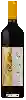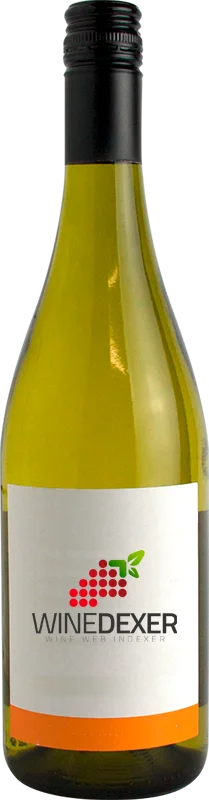
Château de CointesBlanc de Jean
 White wine



In the mouth this white wine is a .
This wine generally goes well with vegetarian, poultry or lean fish.
The Blanc de Jean of the Château de Cointes is in the top 10 of wines of Malepère.
Taste structure of the Blanc de Jean from the Château de Cointes
Light | Bold | |
Dry | Sweet | |
Soft | Acidic |
In the mouth the Blanc de Jean of Château de Cointes in the region of Languedoc-Roussillon is a .
Food and wine pairings with Blanc de Jean
Pairings that work perfectly with Blanc de Jean



Original food and wine pairings with Blanc de Jean


The Blanc de Jean of Château de Cointes matches generally quite well with dishes of pasta, vegetarian or poultry such as recipes of pasta with pistou, summer tuna quiche or chicken noodles.
Details and technical informations about Château de Cointes's Blanc de Jean.
Discover the grape variety: Jacquez
A natural French-American ternary hybrid that most certainly comes from an interspecific crossing between an unknown Vinifera with Vitis Aestivalis and Vitis Cinerea. The Jacquez was at the time the most multiplied in the World, present since always in the Portuguese island of Madeira. For a long time used as a direct producer, it was even used as a rootstock in the south of France, in the United States, in Mexico and in South Africa: some vines grafted on Jacquez still exist today. In France, it is one of the six hybrids prohibited since 1935 (included in European regulations): Clinton, Herbemont, Isabelle, Jacquez, Noah and Othello.
Informations about the Château de Cointes
The Château de Cointes is one of of the world's greatest estates. It offers 13 wines for sale in the of Malepère to come and discover on site or to buy online.

The wine region of Malepère
Malepere is an appellation of red and rosé wines from an area immediately Southwest of Carcassonne in the Languedoc-Rousillon wine region of southern France. The appellation was created as VDQS Côtes de la Malepere in January 1983 and was promoted to FullAOC status in 2007, under the simpler name Malepere. As with the stylistically similar Cabardes appellation (directly to the North), Malepere wines are made from an eclectic combination of Bordeaux and Languedoc grapes. Merlot is the most widely used, combined with Cabernet Sauvignon, Malbec, Grenache, Syrah and Cinsaut.
The wine region of Languedoc-Roussillon
Languedoc (formerly Coteaux du Languedoc) is a key appellation used in the Languedoc-Roussillon wine region of southern France. It covers Dry table wines of all three colors (red, white and rosé) from the entire region, but leaves Sweet and Sparkling wines to other more specialized appellations. About 75% of all Languedoc wines are red, with the remaining 25% split roughly down the middle between whites and rosés. The appellation covers most of the Languedoc region and almost a third of all the vineyards in France.
The word of the wine: BSA
Brut sans année, is said of non-vintage champagnes. It is the technical name of the first price champagne made from wines of different years. They are most often called Tradition, Carte blanche, Réserve. To be drunk quickly, rather as an aperitif.