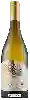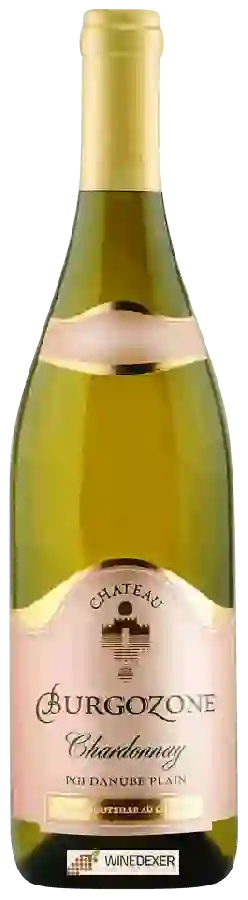
Château BurgozoneChardonnay
 White wine



This wine generally goes well with pork, vegetarian or poultry.
The Chardonnay of the Château Burgozone is in the top 10 of wines of Danubian Plains.

Wine flavors and olphactive analysis





On the nose the Chardonnay of Château Burgozone in the region of Danubian Plains often reveals types of flavors of non oak, earth or microbio and sometimes also flavors of vegetal, oak or tree fruit.
Food and wine pairings with Chardonnay
Pairings that work perfectly with Chardonnay



Original food and wine pairings with Chardonnay

The Chardonnay of Château Burgozone matches generally quite well with dishes of pork, rich fish (salmon, tuna etc) or vegetarian such as recipes of white cabbage with bacon, light tuna-tomato quiche (without cream) or magic cake cheese quiche.
Details and technical informations about Château Burgozone's Chardonnay.
Discover the grape variety: Chardonnay
Whites with many faces: mineral and taut at Chablis (lemon, green apple, flint), opulent and buttery at Meursault and Puligny-Montrachet (hazelnut, brioche, yellow fruits), tense and chalky in Champagne (Blanc de Blancs). Also vinified sparkling and widely exported (Sonoma, Margaret River, Casablanca). A Burgundian variety, a cross of Pinot Noir × Gouais Blanc, half-sibling of Aligoté.
Last vintages of this wine
The best vintages of Chardonnay from Château Burgozone are 2017, 2013, 2015, 0 and 2016.
Informations about the Château Burgozone
The Château Burgozone is one of of the world's greatest estates. It offers 37 wines for sale in the of Danubian Plains to come and discover on site or to buy online.

The wine region of Danubian Plains
One of two Bulgarian IGPs (between the Danube, Balkans and Black Sea), ~30% of national production. Temperate continental climate, fertile chernozem soils. Gamza (Kadarka) the red signature: deep and lightly spiced with wild red and black fruits, plum, walnut, vanilla and a peppery touch, melted tannins — a balanced everyday wine. Light Pamid, Cabernet Sauvignon and Merlot as complements.
The word of the wine: Servadou iron
A black grape variety from the southwest that produces a wine with spicy tannins and black currant and raspberry aromas. Under the name of Mansois, it is the main grape variety of Marcillac; it is also one of the important varieties of Gaillacois, where it is called Braucol. It is also used in the blends of other South-Western appellations (Fronton, Lavilledieu, Estaing, Madiran). Syn.: braucol, pinenc, mansois.