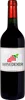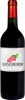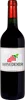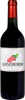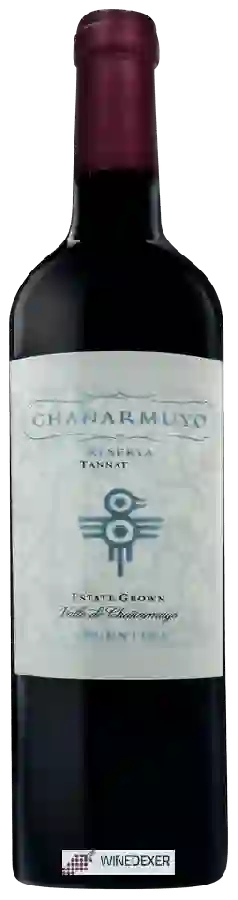
Chañarmuyo EstateEstate Grown Reserva Tannat
 Red wine



This wine generally goes well with beef
The Estate Grown Reserva Tannat of the Chañarmuyo Estate is in the top 10 of wines of La Rioja.

Wine flavors and olphactive analysis


On the nose the Estate Grown Reserva Tannat of Chañarmuyo Estate in the region of La Rioja often reveals types of flavors of earth, oak or black fruit.
Food and wine pairings with Estate Grown Reserva Tannat
Pairings that work perfectly with Estate Grown Reserva Tannat

Original food and wine pairings with Estate Grown Reserva Tannat
The Estate Grown Reserva Tannat of Chañarmuyo Estate matches generally quite well with dishes of beef such as recipes of beef coarse salt.
Details and technical informations about Chañarmuyo Estate's Estate Grown Reserva Tannat.
Discover the grape variety: Tannat
Powerful, tannic reds with inky colour and dense texture, with aromas of blackberry, blackcurrant, black plum, leather, liquorice and smoky notes. Very high ageing potential and polyphenol content (health reputation). Star of Madiran AOC in Béarn and the national grape of Uruguay (Canelones, Maldonado). Also grown in Irouléguy and Tursan. Late-ripening red variety from south-west France.
Last vintages of this wine
The best vintages of Estate Grown Reserva Tannat from Chañarmuyo Estate are 2018, 2017, 2016, 0 and 2014.
Informations about the Chañarmuyo Estate
The Chañarmuyo Estate is one of of the world's greatest estates. It offers 24 wines for sale in the of La Rioja to come and discover on site or to buy online.

The wine region of La Rioja
Wine province of northwest Argentina, historical cradle of national viticulture at over 1,100 m altitude. Torrontés Riojano signature as king white: aromatic and expressive with signature notes of rose, jasmine, white peach, citrus and a musky touch, dry yet round palate — the most expressive of Argentina's three Torrontés, cousin of Muscat. Also dense Malbec, spicy Syrah, supple Bonarda, firm Cabernet. Dry sunny continental climate, drip irrigation.
The word of the wine: Performance
Quantity of grapes harvested per hectare. In AOC, the average yield is limited on the proposal of the appellation syndicate, validated by the Inao. The use of high-performance plant material (especially clones) and better control of vine diseases have increased yields. This is not without consequences on the quality of the wines (dilution) and on the state of the market (too much wine). We must not over-simplify: low yields are not synonymous with quality, and it is often in years with generous harvests that we find the greatest vintages (1982 and 1986 in Bordeaux, 1996 in Champagne, 1990 and 2005 in Burgundy...).