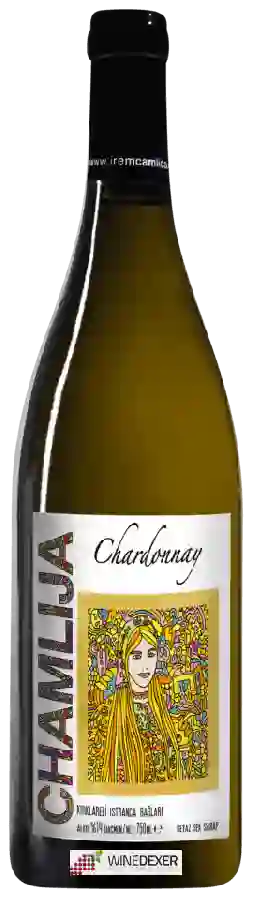
Winery ChamlijaChardonnay
 White wine


This wine generally goes well with pork, vegetarian or poultry.

Wine flavors and olphactive analysis




On the nose the Chardonnay of Winery Chamlija in the region of Thrace often reveals types of flavors of non oak, earth or microbio and sometimes also flavors of oak, tree fruit or citrus fruit.
Food and wine pairings with Chardonnay
Pairings that work perfectly with Chardonnay



Original food and wine pairings with Chardonnay

The Chardonnay of Winery Chamlija matches generally quite well with dishes of pork, rich fish (salmon, tuna etc) or vegetarian such as recipes of veal saltimbocca, sea bream with sweet spices or quiche with bacon and gruyère cheese.
Details and technical informations about Winery Chamlija's Chardonnay.
Discover the grape variety: Chardonnay
Whites with many faces: mineral and taut at Chablis (lemon, green apple, flint), opulent and buttery at Meursault and Puligny-Montrachet (hazelnut, brioche, yellow fruits), tense and chalky in Champagne (Blanc de Blancs). Also vinified sparkling and widely exported (Sonoma, Margaret River, Casablanca). A Burgundian variety, a cross of Pinot Noir × Gouais Blanc, half-sibling of Aligoté.
Last vintages of this wine

The best vintages of Chardonnay from Winery Chamlija are 2011, 2013, 0, 2014 and 2015.
Informations about the Winery Chamlija
The Winery Chamlija is one of of the world's great estates. It offers 75 wines for sale in the of Thrace to come and discover on site or to buy online.

The wine region of Thrace
Eastern region shared between Turkey, Greece and Bulgaria, a fascinating native palette. On the Turkish side, Öküzgözü ("ox eye") is the signature red: deep ruby with signature notes of ripe cherry, raspberry, plum, spice and a floral touch, supple tannins and lively acidity. More tannic, structured Boğazkere, local Papazkarası. Fresh Narince whites (citrus, flowers, almond), lively Emir.
The word of the wine: Presses
The juice that results from pressing the grapes after fermentation. At the end of the maceration, the vats are emptied, the first juice obtained is called the free-run wine and the marc remaining at the bottom of the vat is then pressed to give the press wine. We say more quickly "the presses". Their quality varies according to the vintage and the maceration. A too vigorous extraction releases the tannins of pips and the wine of press can then prove to be very astringent. Often the winemaker raises it separately, deciding later whether or not to incorporate it totally or partially into the grand vin.